ECB Initiates Rate Hike, Increasing Financing Costs
According to Spanish economists, the European Central Bank (ECB) announced its first interest rate hike since September 2023 on Thursday, June 13. This adjustment raises the main refinancing operations rate, the deposit facility rate, and the marginal lending facility rate by 0.25 percentage points to 2.4%, 2.25%, and 2.65%, respectively. The ECB explained that this decision is linked to the greater-than-expected economic impact of the war in the Middle East.
Market Cools Down: Transaction Volumes Drop, Barrier to Entry Rises
Multiple experts and institutions in Spain agree that the most direct consequence of the rate hike is not a drop in housing prices, but an increase in financing costs, which will have a cooling effect on the real estate market.
Analysts at the Spanish bank Bankinter predict that higher interest rates will directly increase the financial burden on household incomes, potentially causing a 5% drop in real estate transaction volume. The property portal Fotocasa shares a similar view, pointing out that this move will significantly affect the approximately 75% of homebuyers who rely on mortgages. They will find it harder to meet banks’ loan approval criteria, although this impact is expected to become more apparent in the next 3 to 6 months.
An expert from EAE Business School adds that a clear consequence is that some potential buyers will be forced out of the market. This especially affects households whose affordability is already stretched to the limit (e.g., spending 40% of their income on housing), who may now be completely excluded from the market.
Prices Remain Firm: Structural Supply Shortage is the Core Issue
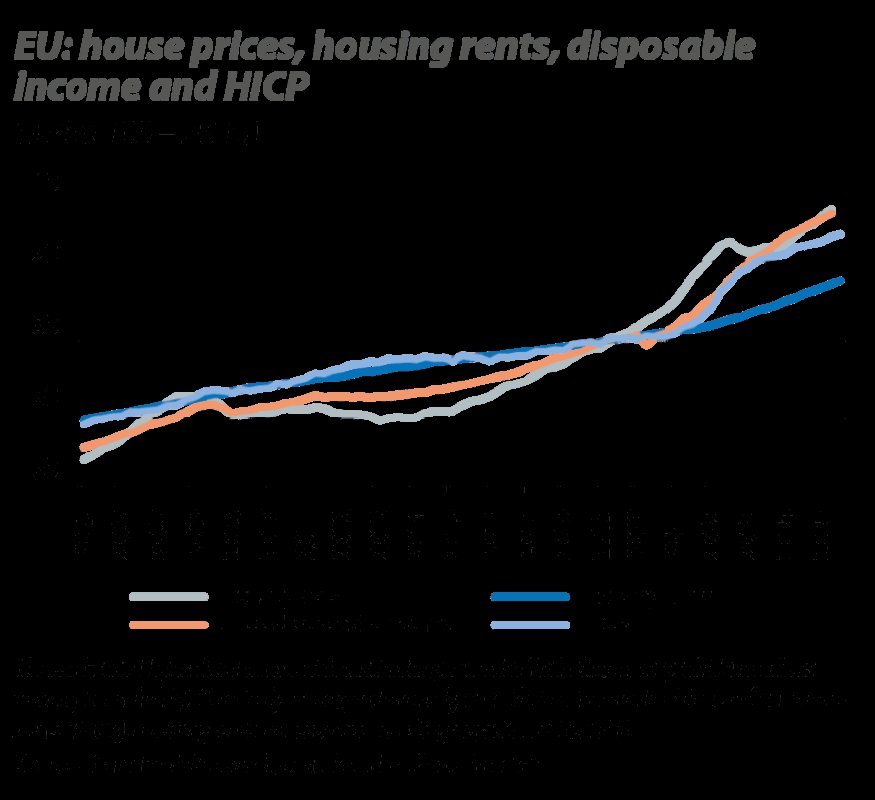
Despite the tighter financing environment, experts widely predict that Spanish property prices will not see a significant drop. The fundamental reason is the market’s structural housing supply shortage, an issue whose impact far outweighs that of the central bank’s interest rate policy.
Real estate industry insiders point out that the primary issue in Spain’s residential market is a ‘supply shortage,’ not credit-driven demand. Therefore, even with rising interest rates, it won’t be enough to trigger a noticeable price correction. Bankinter forecasts that although the growth rate will slow compared to last year’s 13%, Spanish property prices are still expected to rise by about 7% in 2024 due to the persistent supply crunch.
The market may enter a paradoxical situation: on one hand, transaction activity will decrease, and it will become harder for low- and middle-income groups to buy a home. On the other hand, prices will remain firm due to scarcity, making property a continued ‘safe haven’ for those who already have capital.
Long-Term Impact: Pressure on Developers Could Worsen Future Supply Shortages
It’s worth noting that the rate hike not only affects homebuyers but also increases financing costs for property developers. This monetary tightening could potentially inhibit the development and supply of new housing in the future.
Some analysts believe that if the future housing supply decreases due to cost pressures on developers while demand persists, property prices in areas with housing shortages could actually be pushed even higher. Furthermore, experts note that this interest rate adjustment is not expected to significantly change the monthly payments for current mortgage holders.
