Match Recap: Statistical Dominance Fails to Break Deadlock
On June 16, 2026, at the Mercedes-Benz Stadium in Atlanta, USA, Spain, considered the top favorite to win this year’s World Cup, kicked off their group stage campaign against Cape Verde, who are making their debut in the tournament finals. When the final whistle blew, the score was locked at 0-0, marking the biggest upset of the tournament so far.
Statistically, it should have been a one-sided affair. Spain dominated with 74% possession, completed 801 passes, won 11 corners, and took 27 shots, accumulating an expected goals (xG) value of 2.16. However, these overwhelming numbers failed to translate into a single goal. Cape Verde, with their disciplined defense and an outstanding goalkeeper, tenaciously held on for a draw.
Tactical Analysis: A Toothless Attack and Questionable Lineup
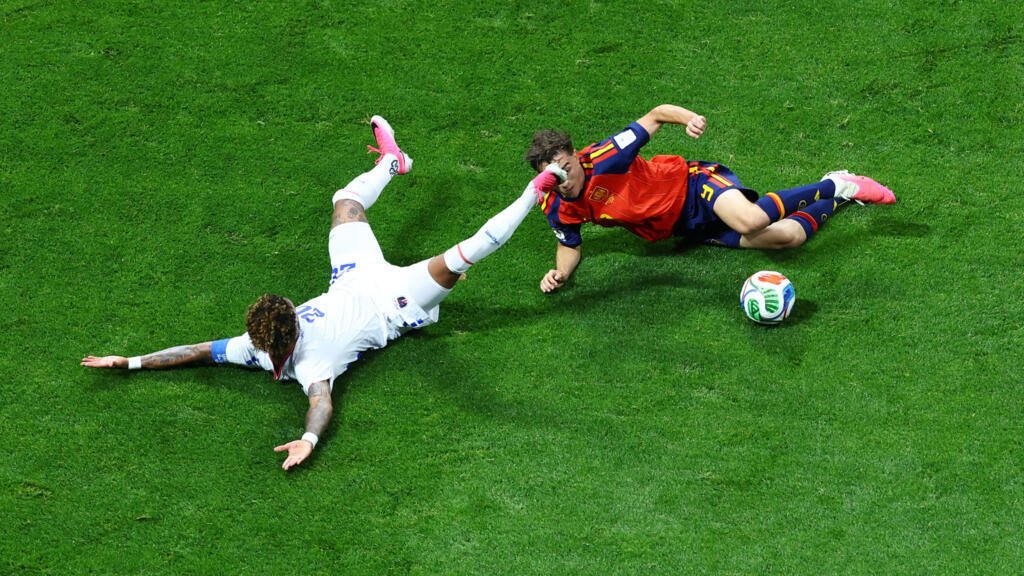
This match starkly exposed Spain’s inability to break down a deep-lying defense. Facing Cape Verde’s 5-4-1 low block, head coach Luis de la Fuente’s lineup choices sparked debate. He deployed Gavi on the left wing while leaving a natural winger and attacking midfielder, Dani Olmo, on the bench. Furthermore, due to injuries, key wingers Lamine Yamal and Nico Williams were also not in the starting eleven.
This setup left Spain almost completely devoid of depth and speed on the wings for the first 70 minutes, with their attack bogged down in ineffective, sideways passing. Starting center-forward Mikel Oyarzabal was isolated in the box, even setting an embarrassing record of zero touches in the first 30 minutes. Spain’s possession-based system proved ineffective against the opponent’s solid backline. In stark contrast, Cape Verde’s 40-year-old goalkeeper, Vozinha, was the hero, making seven crucial saves and repeatedly denying threatening shots from Ferran Torres and Oyarzabal to become the main architect of his team’s historic point.
Outlook: A Wake-Up Call and the Path Forward
Although the draw doesn’t end Spain’s 32-match unbeaten streak in competitive games and they still control their destiny in the group, the problems exposed cannot be ignored. The team lacks effective ways to break down ultra-defensive opponents, and players grew increasingly frustrated as the match went on, leading to more errors.
It wasn’t until the 71st minute, when 18-year-old Lamine Yamal came on as a substitute, that Spain’s wing play showed some signs of life, but it was too little, too late. Next, Spain will face Saudi Arabia and Uruguay, with no more room for error. How to adjust tactics, add layers to the attack, and get the forwards firing are immediate challenges for De la Fuente and his La Furia Roja. If they hope to go far in the knockout stages, Spain will need more than just beautiful possession; they must rediscover the decisiveness and ability to deliver a killer blow when it matters most.
