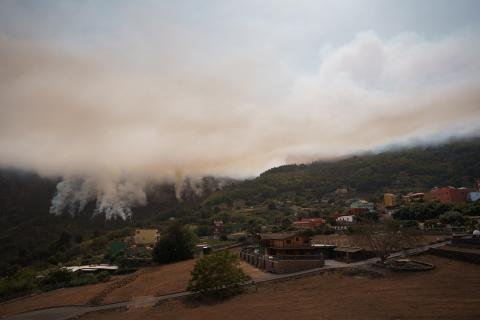
According to the latest report from the European Forest Fire Information System (EFFIS), part of the EU’s Copernicus Earth Observation Programme, Spain’s wildfire situation in 2026 so far is highly alarming.
Data Reveals a Grim Situation
As of mid-June 2026, a total of 254 wildfires have been recorded in Spain, destroying 39,296 hectares of forest. Both figures are more than three times higher than the same period last year, when 76 fires and 12,625 burned hectares were recorded in 2025. This sharp, simultaneous increase in both the number of fires and the affected area highlights the unusual severity of this year’s situation.
Historical Comparison and Recent Trends
Compared to the historical data from 2006 to 2025, the burned area to date this year (39,296 hectares) is more than double the average for the same period (16,356 hectares), though it has not yet reached the record high for that timeframe (65,793 hectares).
Recent activity has fluctuated. The week of June 4-10 was particularly intense, with 5,949 hectares burned—four times the area of the same period last year (1,443 hectares). However, the situation has eased in the most recent week, with 7 fires and 1,347 hectares burned, a decrease compared to the 6 fires and 2,638 hectares recorded during the same week last year.
Outbreaks Across Multiple Regions, Huelva Province Hit Hard
Recently, wildfires have broken out in several Spanish regions, mainly concentrated in Andalusia (provinces of Huelva, Málaga, Seville, and Córdoba), Galicia (provinces of A Coruña, Ourense, and Lugo), and Catalonia (province of Lleida).
Among these, the fire in the town of Castillejos, in the province of Huelva, Andalusia, has drawn the most attention. Although now extinguished, it caused significant damage, burning over 5,000 hectares of land in the town and the neighboring municipalities of Gibraleón and San Bartolomé de la Torre.
A Warning in the Context of Climate Change
Spain just experienced its worst wildfire season in three decades in 2025, with over 390,000 hectares burned throughout the year. Against this backdrop, the continuously high figures at the start of 2026 have raised serious alarms among ecologists and climate experts. Spain’s ecological and environmental authorities have issued a clear warning: the current data reflects that under the ‘new normal’ of rising temperatures, intensified droughts, and unfavorable wind conditions, existing firefighting policies face immense challenges and require urgent adjustment and reinforcement.
