New Rule Takes Effect: Transport Pass Linked to Residency
According to a new regulation issued by the Community of Madrid’s Regional Transport Consortium (Consorcio Regional de Transportes de Madrid) and published in the official gazette, as of Saturday, June 15, 2024, anyone applying for or replacing a Madrid public transport pass (Abono Transporte) must present a valid certificate of residency registration (empadronamiento) from any municipality within the Community of Madrid.
The pass allows holders to take unlimited journeys on public transport within specific zones for a fixed monthly fee. This new rule means that individuals unable to provide proof of local residency—such as some inter-regional commuters, short-term residents, or certain immigrant groups—will no longer be eligible for the subsidized monthly pass. They will have to opt for more expensive single or 10-journey tickets, significantly increasing their travel costs.
Fierce Reactions: Policy Labeled “Xenophobic” and a “Setback”
The announcement immediately triggered a strong backlash in the Madrid Assembly and across Spain. The left-wing party Más Madrid branded it a “nativist” and xenophobic policy primarily targeting immigrants and vulnerable groups. Lawmakers from the Spanish Socialist Workers’ Party (PSOE) criticized the policy for its “malicious intent” and questioned how it would affect inter-regional workers amid soaring housing costs.
Spain’s central government also expressed strong disapproval. A government spokesperson accused the Ayuso administration’s policy of being “isolationist” and restricting the mobility rights of students, workers, and families. Minister of Transport Óscar Puente went further, calling it a “regression in fundamental rights” that contradicts environmental goals of promoting public transport use and reducing carbon emissions. Conversely, the far-right party Vox argued the measure was “not strict enough” and advocated for even tougher eligibility criteria.
Ayuso’s Government Defends Move: Protecting Local Taxpayers’ Interests
Facing a wave of criticism, the President of the Community of Madrid, Isabel Díaz Ayuso, defended the new regulation. She emphasized that the policy aims to ensure “rigor, seriousness, and order,” guaranteeing that public transport subsidies, approximately 90% of which are funded by Madrid taxpayers, are prioritized for “people who can prove they reside in this region.”
Ayuso stated that the measure is not intended to exclude anyone, as anyone who completes their residency registration in the Community of Madrid can enjoy the same benefits. She also pointed out that similar policies linking public services to residency registration exist in some municipalities in regions like Catalonia and the Basque Country.
The Politics Behind the Policy: A Clash Over Immigration Amnesty
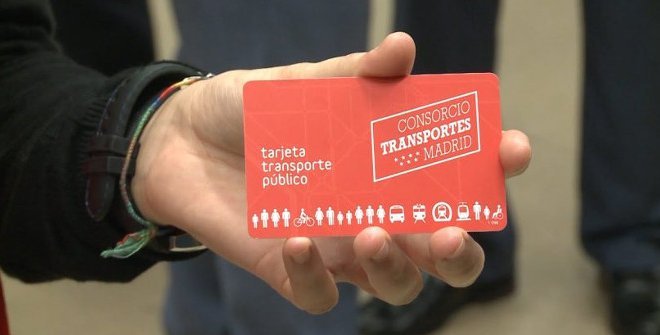
This new transport pass rule is widely interpreted as another political confrontation between Madrid’s right-wing regional government and Spain’s left-wing central government, with the ongoing immigration amnesty plan as a key backdrop.
Under the draft amnesty bill proposed by the central government, applicants need to prove they were residing in Spain before a specific date, and a transport pass is one of the accepted forms of evidence. By making residency registration mandatory for obtaining the pass, the Ayuso government has indirectly made it more difficult for some immigrants to acquire the necessary documentation for the amnesty, especially as some right-wing-governed municipalities may create obstacles for immigrants trying to register. While this move cannot fundamentally stop the amnesty, it clearly signals the Madrid government’s political opposition, serving as another tool in the ongoing power struggle over immigration policy.
