Nationwide Crackdown Yields Significant Results
Fueled by the excitement for the 2026 FIFA World Cup in the USA, Canada, and Mexico, Spain’s market for counterfeit football gear has been booming. In response, the Spanish National Police, coordinated by Europol and Interpol, recently launched a large-scale joint operation across 15 regions of the country.
The operation covered a wide area, including major cities like Madrid, Barcelona, Málaga, and key locations such as Elche and Dénia in the province of Alicante. To date, police have arrested 95 individuals and seized over 66,000 counterfeit national team and club jerseys, weighing more than 16 tons. It is estimated that if these counterfeit goods had reached the market, they would have generated approximately €2 million in illicit profits for the criminal organization, while causing over €7 million in economic losses to official licensed retailers.
Sales Tactics Shift to Covert Methods
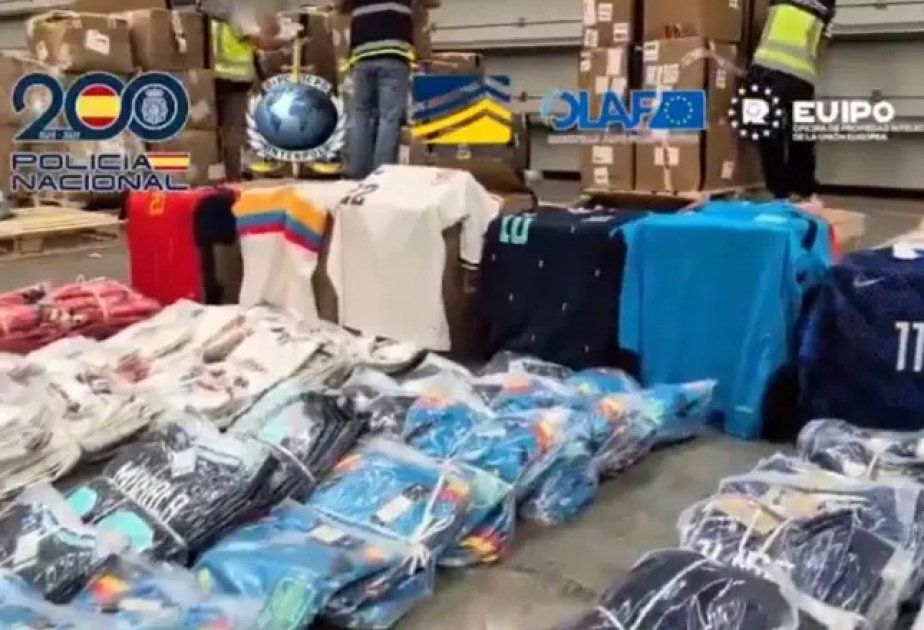
Investigations reveal that the sales model for counterfeit jerseys has shifted from traditional street stalls to more discreet and decentralized methods. Criminals no longer display their goods openly, instead using private residences as ordering and distribution hubs. They connect with buyers through personal networks or online channels and then arrange point-to-point delivery. In Madrid’s historic Lavapiés neighborhood, police dismantled one such hub where two suspects were distributing jerseys from a home based on pre-orders. These fakes are sold at extremely low prices, typically between €5 and €20, making them highly attractive to consumers.
Counterfeit Production Chain and Market Disruption
Police noted the astonishing speed of production and distribution for these counterfeit items. For instance, high-quality replicas of the Spanish national team’s away kit appeared on the black market on the very day of its official release. Investigators suspect that design blueprints for some jerseys are leaked through unofficial channels before the official launch, with the source potentially pointing to factories in Asia, particularly within certain supply chain links in China. It is believed that some factories may handle production orders for both authentic and counterfeit goods simultaneously, allowing fakes to potentially hit the market even before the genuine articles.
The craftsmanship of these counterfeit jerseys is so refined that they replicate nearly every detail of the authentic products, including crests, numbers, commercial tags, packaging, and even visual authentication marks, making it difficult for the average consumer to spot the difference by sight. Police advise that a key distinguishing feature is the complex security hologram found on genuine jerseys, which displays dynamic changes when viewed from different angles—a security feature that is difficult for counterfeiters to reproduce.
Targeting Popular Stars and Key Warehouses
The operation began in April of this year when law enforcement noticed a massive influx of counterfeit goods into the Spanish market. As the investigation deepened, police not only identified multiple sales points but also uncovered large industrial warehouses used for storage and transit in areas like San Fernando de Henares, on the outskirts of Madrid. These warehouses contained mountains of counterfeit jerseys intended for distribution to sales points across the country during the World Cup.
Among the seized counterfeit jerseys, those of popular national teams like Spain, Portugal, and Brazil were the most prevalent. Additionally, a large number of replicas were found for club jerseys associated with top stars such as Kylian Mbappé, Lamine Yamal, Vinicius Junior, and Cristiano Ronaldo.
