Market Status: Room Rentals Surge with Yields Up to 7.8%
According to data from real estate platform pisos.com, the number of rooms available for rent in Valencia, Spain, has doubled in the last two years, reaching a total supply of 5,395. Over 60% of these (3,462 rooms) are concentrated in the city center. This is a stark contrast to the pre-pandemic market, which had fewer than 800 rooms available.
The core driver of this trend is the substantial return on investment. Currently, landlords can achieve an average annual yield of 7.8% by dividing apartments and renting them out room by room. To maximize profits, some landlords are even converting living rooms into additional bedrooms for rent.
The Motivation: Legal Advantages and Risk Diversification
According to analysis from real estate agents and experts (API), beyond financial gains, stronger legal protections are a key factor prompting landlords to abandon traditional single-property leases. Firstly, compared to renting out an entire property, dealing with a single tenant’s breach of contract (such as rent arrears) is legally simpler and faster, significantly shortening the eviction process.
Secondly, current Spanish law grants tenants of entire properties the right to renew their contract for up to five years, limiting a landlord’s control over their property. Room rental agreements are not subject to this clause, and landlords can also enter the common areas of the property for supervision at any time. Furthermore, the room-by-room model effectively diversifies risk; even if one room is vacant, rental income from the others ensures a stable cash flow.
The Tenant’s Dilemma: Soaring Rents and Limited Options
Landlords’ rising profits come at the expense of a sharp increase in tenants’ living costs. Data from the Idealista platform shows that the average monthly rent for a single room in Valencia has surpassed €400, with prices for well-located rooms in the city center approaching €550. Meanwhile, only about 40 affordable rooms priced under €300 per month are left in the entire city, leaving market options extremely limited.
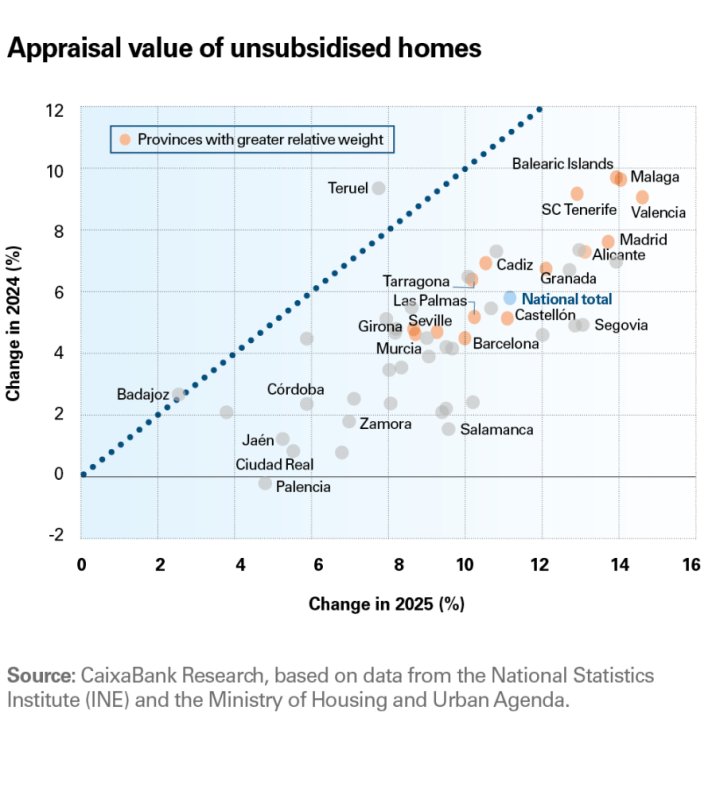
Across Spain, the room rental market is similarly heated. Barcelona leads with an average monthly rent of €600 per room, followed by Madrid (€587), Palma de Mallorca (€500), and San Sebastián (€470).
Social Impact: Pressure on Workers and Students
The widespread rent hikes have triggered a chain of social problems. On one hand, a large number of working professionals over the age of 35 are forced into long-term flat-sharing arrangements, unable to afford renting an entire property or even a single room on their own. On the other hand, students are being progressively priced out of the city’s core. Many students from out of town, unable to afford the high rents, have had to abandon living near campus and instead commute long distances from their parents’ homes.
Industry insiders also caution that while the on-paper returns of the room rental model are attractive, it comes with higher management costs, including more frequent tenant turnover, increased wear and tear on the property, and complex day-to-day operational maintenance. Prospective landlords should fully assess these “effort costs.”
