Spain’s National Meteorological Agency (Aemet) issued a special weather warning on June 20, announcing the arrival of the first heatwave of the 2026 summer. According to the alert, the heatwave is expected to officially begin on Sunday, June 21, and last until Wednesday, June 24, affecting most of the Iberian Peninsula and the Balearic Islands.
Soaring Temperatures May Set New Records
Temperatures began to climb on Saturday, June 20, and will intensify further on Sunday. On Saturday, inland areas such as Castile-La Mancha, Madrid, Extremadura, Aragon, and La Rioja already saw maximum temperatures of 36 to 38 degrees Celsius, while Andalusia reached between 39 and 40 degrees Celsius. The heatwave will peak between Monday, June 22, and Tuesday, June 23, when temperatures in major inland river valleys are forecast to rise to 42-44°C, potentially nearing 45°C in some locations. Meteorologists note the intensity of this heatwave is exceptional, especially in northern Spain, where temperatures could be 10 to 15°C higher than the seasonal norm, and are expected to break records for this time of year.
Multiple Risks Converge, Nighttime Heat a Key Concern
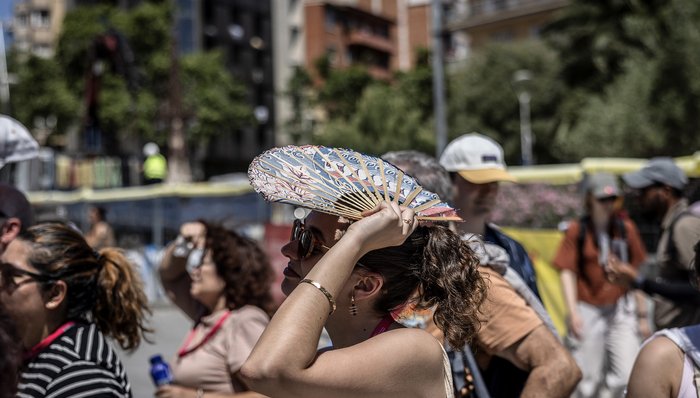
This heatwave brings not only scorching daytime heat but also particularly high nighttime temperatures, which will severely disrupt sleep and pose a greater health risk to vulnerable groups such as the elderly, young children, and individuals with chronic illnesses. Additionally, the heatwave may be accompanied by haze, further increasing the feels-like temperature and worsening air quality. Simultaneously, dry thunderstorms may occur in mountainous areas, where the combination of lightning and dry vegetation will significantly increase the risk of forest fires.
Urban Response Strategies: Barcelona Adds Shading Facilities
To cope with the increasing frequency of extreme heat events, some cities are taking proactive measures. In Barcelona, for example, the city government has added 75 shaded areas in parks, squares, and school playgrounds over the past three years, bringing the city’s total to over 200. According to city council data, these canopies can effectively reduce direct solar radiation by up to 80% and lower the average temperature in shaded areas by 7.59°C compared to sun-exposed areas. To further enhance its cooling capacity, Barcelona plans to invest another €2.3 million over the next three years to add more than 5,000 square meters of shaded space.
