“Scorching” Temperatures Grip Much of Spain
This week, Spain is experiencing one of its most intense heatwaves of the year, putting the entire country on high alert for scorching temperatures. In southern regions like Córdoba and Jaén, temperatures have soared to 42°C. As of June 24, data from the Spanish National Meteorological Agency (AEMET) shows that 14 autonomous communities remain under various levels of heat warnings.
Specifically, the Basque Country has been under the highest-level red alert for four consecutive days, while Galicia and the Balearic Islands are on yellow alert. Most other regions remain on orange alert. In central areas, including Madrid, and the Ebro Valley, daytime highs are consistently near or above 40°C.
High Temperatures to See Brief Respite
According to AEMET’s forecast, an upper-level low-pressure system (known as a DANA in Spanish) is moving west of Spain and is expected to bring a significant cool-down to most areas starting from June 25. Temperatures in western regions are projected to drop by 3 to 6°C, with some northern cities in Galicia seeing a drop of up to 8 to 10°C. Maximum temperatures across most of the country will fall below 35°C.
However, residents along the Mediterranean coast and in the Ebro Valley will still have to endure ‘tropical nights’ (noches tropicales), where overnight lows remain above 25°C. The meteorological agency also warns that the heat could return as a high-pressure system may rebuild over the weekend.
New Air Conditioner Rules: Why Are Facades Off-Limits?
Just as people are relying on air conditioning to cope with the heatwave, a regulation concerning the installation of outdoor AC units has become a hot topic. Under current Spanish law, a building’s facade is considered a common element belonging to all owners, not private property. Therefore, installing an outdoor AC unit on visible areas like the main facade without permission is considered an unauthorized alteration of a common area.
This rule means that even with the approval of the homeowners’ association (comunidad de propietarios), the local city council (ayuntamiento) still has the authority to intervene based on urban planning ordinances. Major cities like Madrid and Barcelona have long had local regulations strictly limiting the direct exposure of outdoor AC units on street-facing building facades.
Fines Up to €3,000 and Mandatory Removal
The consequences for improperly installing an outdoor AC unit are severe. If deemed non-compliant by municipal authorities, the owner may face a double penalty: first, a fine ranging from several hundred to as much as €3,000, depending on the severity of the violation; second, they must remove the unit at their own expense and restore the building’s facade to its original condition.
It’s important to note that enforcement doesn’t always require a neighbor’s complaint. Municipal technicians can initiate an investigation and penalty process if they spot a violation during routine inspections. Many residents only realize their installation is illegal, even after many years, when they receive an official notice.
Four Key Considerations for Compliant Installation
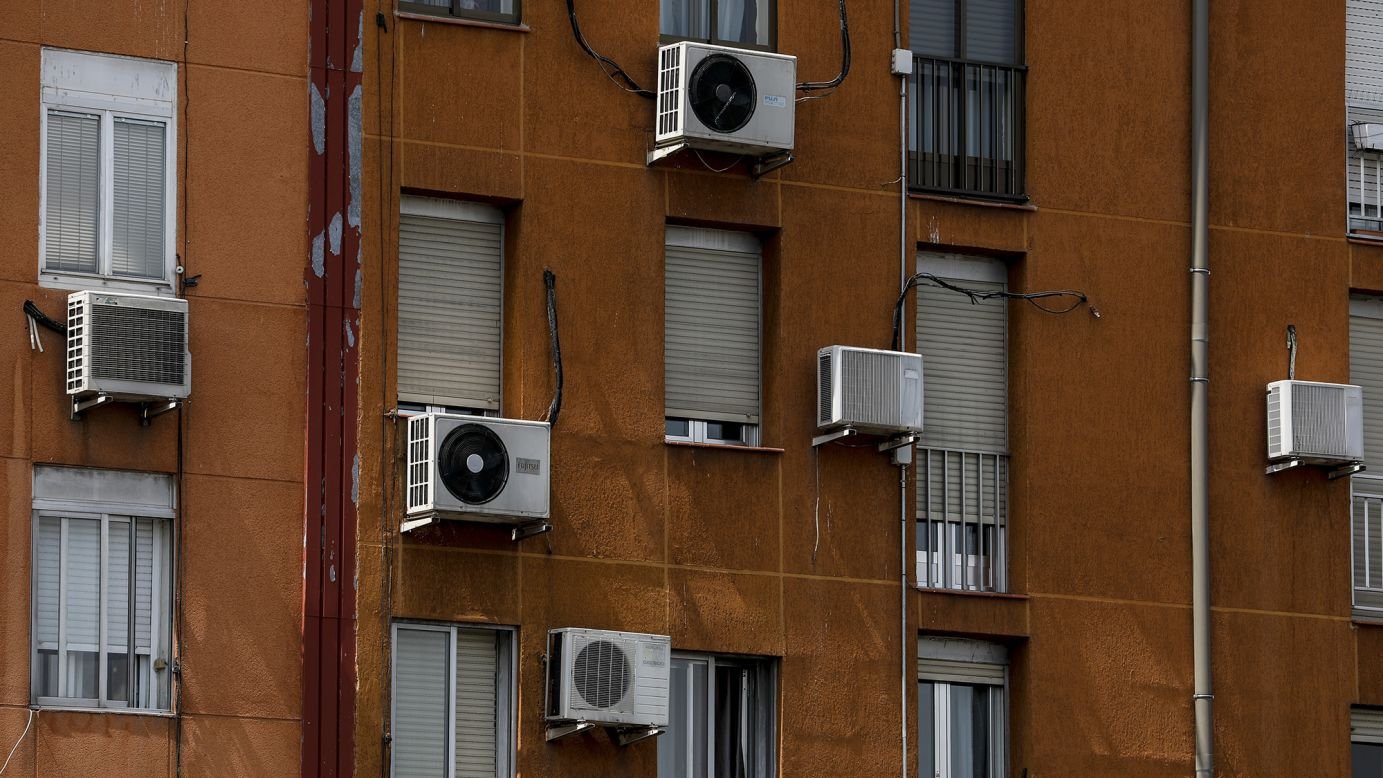
The government’s main reasons for enforcing these strict regulations include four aspects:
- Urban Aesthetics: To maintain the uniformity of the streetscape, especially in historic districts and on protected buildings, preserving their architectural heritage.
- Public Safety: To prevent units from falling due to aging or improper installation, which could pose a threat to pedestrians below.
- Noise Control: To limit the noise produced by the compressor during operation, avoiding disturbances to neighbors and the surrounding environment.
- Health and Safety: To prohibit condensation from dripping directly onto streets or public walkways, which can cause slippery surfaces and safety hazards.
Therefore, for residents planning to install air conditioning, compliant locations typically include: internal courtyards, rooftops, or other concealed areas not directly visible from the street. Furthermore, all installation work must be carried out by certified professionals to ensure it meets technical and safety standards. Before installation, it is highly recommended that homeowners consult their local city council (ayuntamiento) for specific regulations to avoid unnecessary trouble and financial loss.
