Summary
Recently, Spain’s Ministry of the Interior and the General Directorate of Traffic (Dirección General de Tráfico, DGT) have jointly issued an urgent warning about a rising wave of phishing scams impersonating official bodies. The public is urged to be especially vigilant against fake ‘traffic fine’ notifications received via mobile phone to avoid personal data leaks and financial loss.
How the Scam Works: Impersonating Authorities to Lure Victims
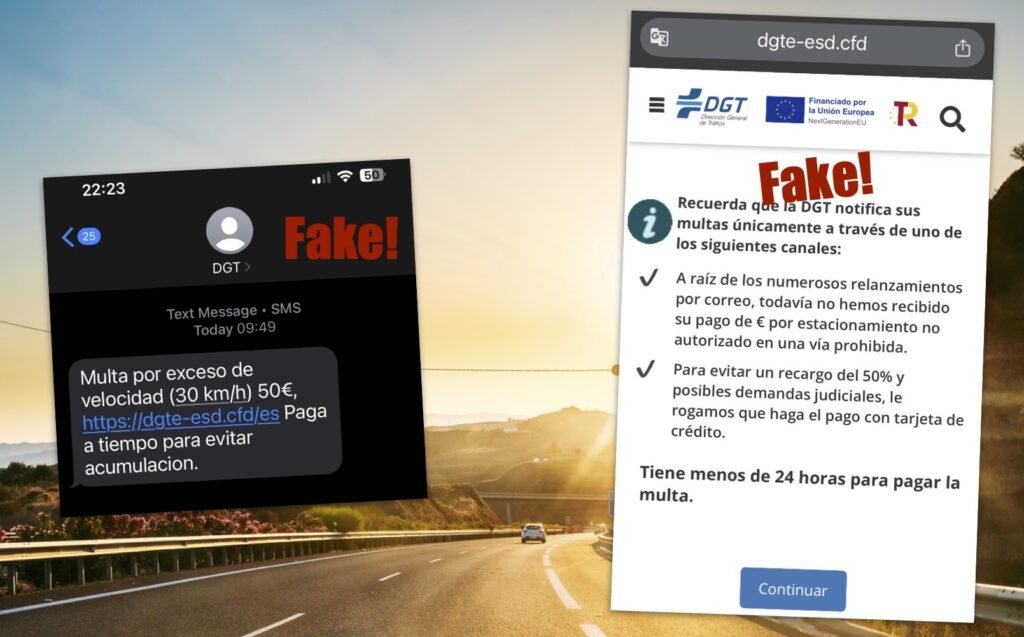
The core technique of this scam is ‘phishing.’ Scammers send messages disguised as official DGT notifications via email, SMS, or instant messaging apps like WhatsApp. These messages typically claim the recipient has an unpaid traffic fine or needs to update their personal details, and include a link that appears to be official.
Once the victim clicks the link, they are redirected to a carefully crafted counterfeit website. This site then prompts them to enter sensitive personal information, such as bank card numbers, passwords, security codes, or online banking credentials. After obtaining this information, the criminals can steal funds from the victim’s account.
Official Clarification: DGT’s Formal Notification Channels
The DGT has repeatedly stressed through its official channels that it follows strict procedures for sending penalty notices and will never notify fines via SMS or email containing a direct payment link.
Currently, the two official channels DGT uses to deliver fine notifications are:
- Certified Mail (Correo Postal Certificado): Paper fine notices are sent via the postal system to the vehicle owner’s registered address.
- Electronic Road Address System (Dirección Electrónica Vial, DEV): Notifications are sent electronically to users who have registered for this service.
If you have doubts about a fine notification you’ve received, you should verify it through the DGT’s official electronic headquarters or the ‘Single Edictal Board’ (Tablón Edictal Único, TEU). Never trust information from unofficial sources.
Safety Advice: How to Prevent and Respond
The Spanish National Cybersecurity Institute (Instituto Nacional de Ciberseguridad, INCIBE) has provided clear guidance on how to deal with this type of scam:
- Stay Alert: When you receive any suspicious notification asking for payment or personal information, be skeptical. Delete it immediately and do not click any links or download attachments.
- Act Immediately: If you have accidentally clicked the link and provided your bank details, contact your bank immediately to block your card or take other protective measures to prevent potential financial loss.
- Save Evidence and Report It: Take screenshots of the scam message and related web pages. Keep all evidence and report the incident immediately to the online crime units of the National Police (Policía Nacional) or the Civil Guard (Guardia Civil).
Law enforcement agencies have stated they will continue to monitor new trends in these cybercrime activities and will issue timely alerts to the public through official channels to protect citizens’ assets.
