Breaking Down Spanish Household Spending in 2025: Average Exceeds €35,000 as Pressure on Low-Income Groups Mounts
According to the annual Family Budget Survey released by Spain’s National Statistics Institute (INE), the average expenditure for a Spanish household in 2025 was €35,101. This represents a 3.1% increase from the previous year, slightly outpacing the annual inflation rate of 2.9%. The report provides a detailed analysis of structural changes in household spending, highlighting a significant rise in housing-related costs and a vast disparity in financial pressure across different income levels.
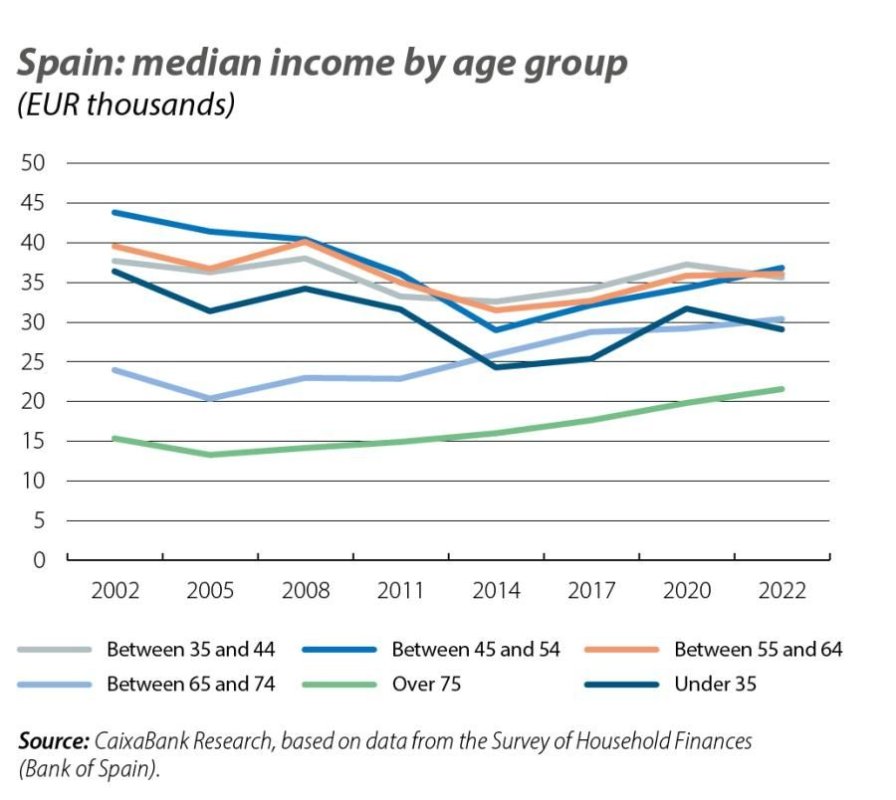
Housing Costs Become the Largest Expense, Driving Up Total Household Spending
Data shows that the growth in Spanish household spending in 2025 was primarily driven by housing-related costs. Expenses including housing, water, electricity, gas, and other fuels saw a year-on-year increase of 5.8%, with the average household spending over €11,600 on this category. This accounts for 33.2% of the total family budget, making it the largest single expenditure. When combined with food (16%) and transportation (11.5%), these three essential living costs make up 60% of total household spending. Additionally, spending on personal care and social protection also saw a notable increase of 5.2%.
Shifting Consumer Habits: Less Spending on Alcohol and Tobacco, Decline in Dining Out
In contrast to the rise in essential living costs, some non-essential spending has contracted. The report indicates that in 2025, Spanish household spending on alcoholic beverages and tobacco decreased by 3.4% year-on-year, with an average expenditure of €431.8 per household. Simultaneously, spending on restaurants and hotels also dropped by an average of 2.7% to €3,280. However, consumer habits show clear age-related differences: young households (ages 16 to 29) spent the least on alcohol and tobacco (around €217.4) but allocated 12.2% of their budget to restaurants and hotels, significantly higher than the 6.6% spent by older households.
Income Disparity Widens the Consumption Gap
The survey highlights the decisive impact of income levels on household spending patterns. For low-income households, the burden of necessities is particularly heavy, with 61.5% of their budget allocated to housing, energy supplies, and food, resulting in a high cost of survival. In contrast, high-income households spend only 41.2% on these essential items. Wealthier families have more financial capacity to spend in other areas; for example, their transportation spending accounts for 16% and restaurant and hotel spending for 10.9% of their budget, both significantly higher than the proportions for low-income households (11.5% and 9.3%, respectively).
Significant Differences by Household Type and Region
In terms of household structure, two-parent families with children have the highest average annual expenditure, reaching €44,438. Conversely, households of single individuals aged 65 and over have the lowest spending, at €23,024. Notably, single-person households under 65 saw the fastest growth in spending, with a 7% year-on-year increase to €23,784, while spending growth for single-parent families remained relatively stagnant.
Regional disparities are also pronounced. In terms of average annual per capita expenditure, the Basque Country leads the nation at €16,642, closely followed by the Community of Madrid at €16,124. In contrast, Andalusia has the lowest per capita spending in the country at €12,197, with Extremadura and Murcia also at lower levels, reflecting the economic and cost-of-living gaps between Spain’s different regions.
