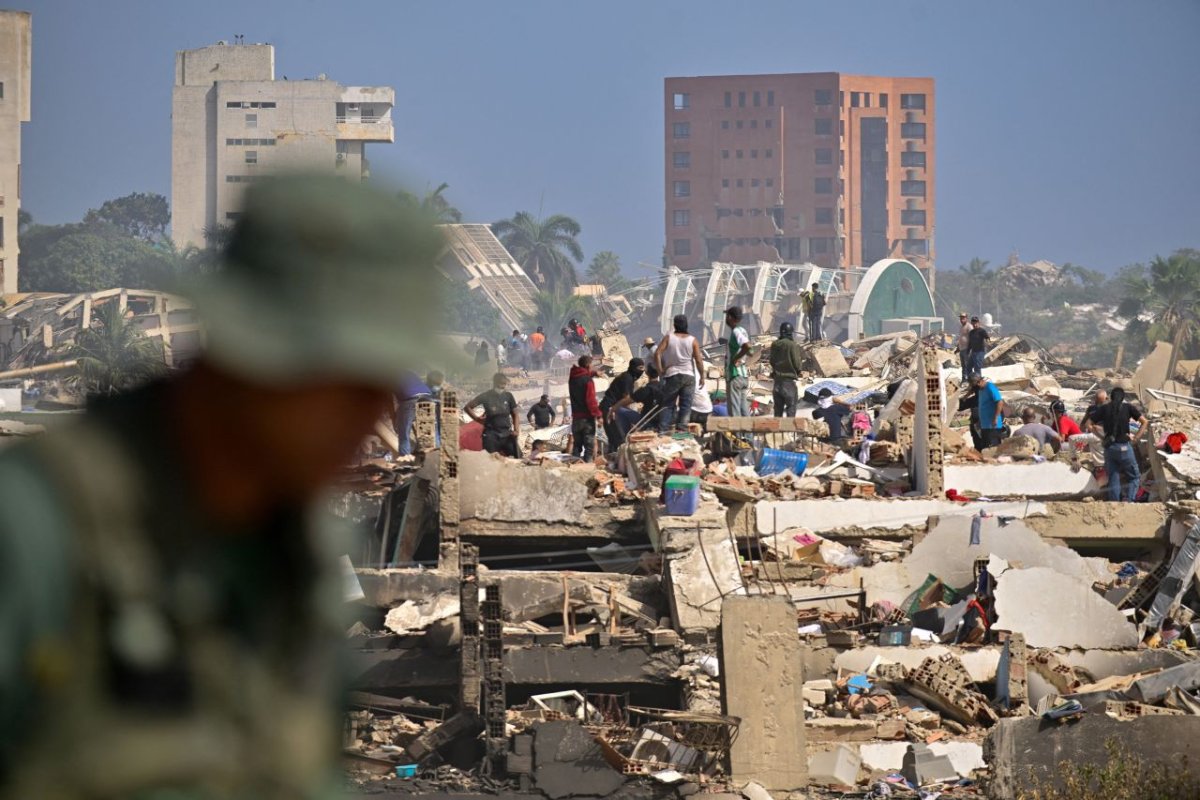
Venezuela has been struck by two devastating earthquakes, leaving hundreds dead, thousands injured, and the number of missing registered on the official search website approaching 50,000. In response to the severe disaster, Spain swiftly organized several professional rescue forces, which were urgently dispatched on Friday, June 28, 2026, launching a transnational life-saving mission against the clock.
Official Forces Lead the Way, Establishing a Rescue Coordination Hub
Spain’s official rescue forces were the first to arrive. By Friday noon, a 69-member team from the Spanish Military Emergencies Unit (UME) and a 40-member professional team from Madrid’s Emergency Response Team (ERICAM) had already landed in Venezuela. As a UN-certified team, ERICAM’s initial task is highly strategic. Annika Köll, the team leader coordinating from Spain, explained that they will immediately set up a coordination center to consolidate on-site information and support subsequent international rescue teams. She emphasized, “If each new team needs 4 hours to get up to speed, doing this work in advance for the 30 teams that are about to arrive will save 120 valuable hours that can be used directly for search and rescue.”
Civilian Experts Mobilize with Advanced Equipment
At Madrid-Barajas Airport, Spain’s civilian rescue forces were also preparing to depart. The NGO “Firefighters Without Borders” dispatched a multidisciplinary team of 12 experts, including collapsed structure rescue specialists, search and rescue dog handlers, and medical personnel. Lorenzo Álvarez, 58, a veteran of several earthquake responses including in Turkey and Haiti, stated they were carrying enough supplies to be self-sufficient in the disaster zone for 6 to 7 days. Meanwhile, an 11-member team from another NGO, “Spanish SAR Firefighters,” was preparing to board the same flight. Alfonso Parada, 49, explained that they are equipped with high-tech gear such as seismic listening devices, thermal imaging drones, and 60-meter-long infrared camera cables to detect and locate trapped individuals. Unlike Firefighters Without Borders, they are carrying minimal food, planning to source supplies locally, and stated their mission has “no return date.”
The Golden 72 Hours: A Race Against Time
All rescuers are acutely aware of the cruelty of time. Parada pointed out that the first 72 hours after the earthquake is the “absolute priority window” for finding survivors. As time passes, the chances of survival decrease dramatically due to dehydration, lack of food, and worsening injuries. Álvarez agrees, believing that “finding someone alive after the seventh day is almost a miracle.” However, hope is not entirely lost. Köll added that although rescue efforts become slower and more specialized over time, miracles can still happen. She cited an example from the earthquake in Turkey: “We once rescued a woman who had been trapped for nearly 7 days without food or water.” This motivates every rescuer not to give up any chance of saving a life amidst the rubble.
