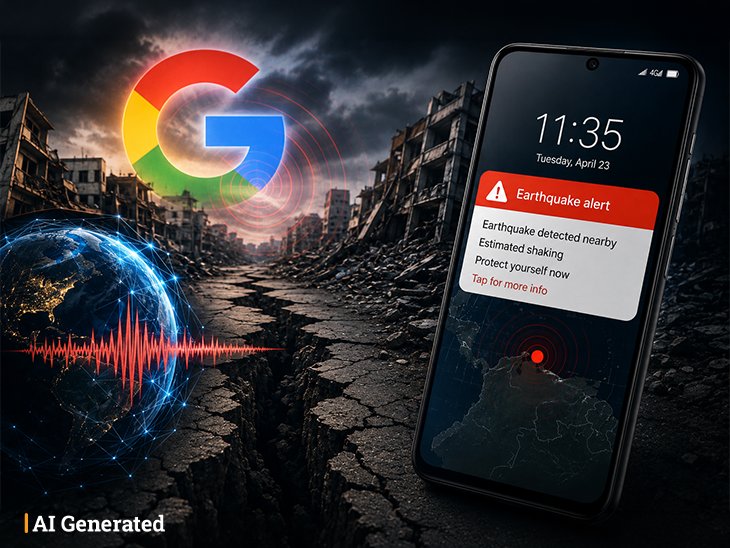
In a recent series of earthquakes in Venezuela, many Android phone users experienced a form of ‘precognition’ thanks to technology. Seconds before feeling the tremors, their phones issued an earthquake alert, providing valuable time to evacuate and find shelter. A video on social media, which gained widespread attention, showed a man receiving the alert and quickly leaving his apartment with his daughter, reaching a safe area just before the earthquake struck.
How It Works: Your Phone as a Seismometer
The core of this alert system relies on the precision sensors found in most modern smartphones: accelerometers. When the initial, less destructive seismic wave (P-wave) arrives, it’s strong enough to be detected by the phone’s accelerometer. If a large number of Android devices in one area detect similar unusual vibrations simultaneously, this data is instantly sent to Google’s servers.
A back-end algorithm rapidly analyzes this vast amount of data. If it determines an earthquake is occurring, it immediately sends an alert to users in areas likely to be affected by the subsequent, more destructive seismic wave (S-wave). Because radio signals travel much faster than seismic waves, this mechanism creates a warning window of several to ten-plus seconds.
Spanish Experts: Even a Few Seconds Can Save Lives
Seismology experts in Spain have given positive feedback on the technology’s real-world performance. A seismologist from the Spanish National Research Council (CSIC) stated that even a few seconds of warning is enough for people to take critical safety measures, such as getting under a sturdy table or moving away from objects that could fall, effectively preventing injuries during an earthquake.
The head of Spain’s National Seismic Network echoed this sentiment, noting that although the warning time is short, these ‘golden seconds’ can often be the difference between life and death in a disaster. These alerts offer a tangible opportunity to save lives.
The World’s Largest Seismic Network: A Contribution from Every Android Phone
This event highlights a growing trend: every active Android phone has unknowingly become part of a global scientific project. Together, they form a crowdsourced seismic detection network of unprecedented scope and density.
This system, composed of billions of ordinary user devices, is not just a tool for personal communication and entertainment but also a powerful public safety infrastructure. Operating globally, it transforms everyday phones into life-saving ‘sentinels,’ demonstrating the immense potential of distributed technology in disaster prevention and mitigation.
