Application Numbers Surge, Far Exceeding Government Estimates
The application window for Spain’s highly anticipated special immigration regularization program is set to officially close on June 30. According to reports from Spain’s national broadcaster RTVE, the number of applications received just before the deadline has reached between 1.2 and 1.3 million, a figure that vastly surpasses the government’s initial forecast of around 500,000. Notably, the Unified Police Union (SUP) had previously estimated approximately 1.25 million applications, a number that aligns more closely with the current reality and underscores the significant gap in the government’s initial assessment.
Application Hurdles and Calls for an Extension
Since the program’s launch on April 16, many applicants have encountered significant difficulties in preparing their documents. A major early challenge was obtaining the “certificate of vulnerability” required for some, though this was eased by the intervention of more NGOs. However, for applicants from countries such as Algeria, Cuba, Guinea, and Gambia, acquiring a criminal record certificate from their home country remains a formidable obstacle. Consequently, the social platform “Regularización Ya” (Regularization Now), a key advocate for the initiative, continues to press the government to extend the deadline, asserting it is the “government’s responsibility” to ensure all eligible individuals can apply. This call has been publicly backed by ruling coalition member Sumar and the political party Podemos, both of whom advocate for more time to prevent applicants from being excluded due to administrative hurdles.
Government Stance and Societal Reactions
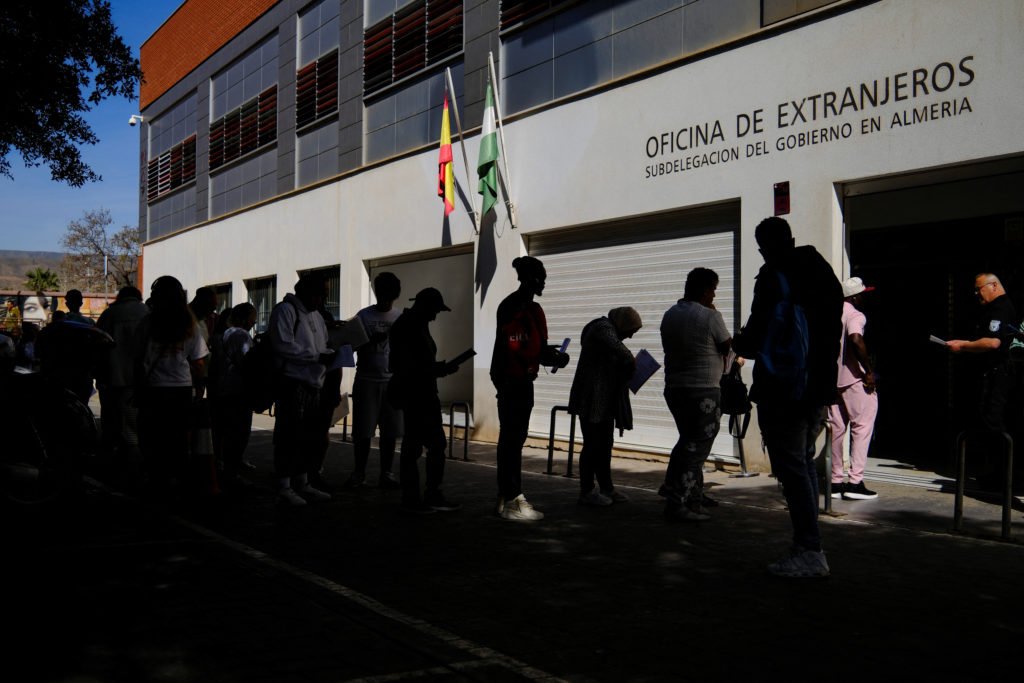
Spanish Prime Minister Pedro Sánchez has described the regularization as a “historic” initiative and plans to preside over a summary meeting on June 30. He stressed that it is a decision reflecting fairness and justice that promotes social integration, and has repeatedly highlighted the vital contribution of immigrants to Spain’s economy. Sánchez also noted that the process is supported by the Vatican and the Spanish business community. The trade union CCOO (Workers’ Commissions) has played a significant role, helping to file over 7,500 applications, primarily from nationals of Colombia, Peru, and Venezuela, with approximately half being women. Sofía Castillo, CCOO’s head of immigration affairs, affirmed that the union will continue to offer training and assistance with credential recognition to help immigrants access better job opportunities.
Post-Deadline Challenges: Police Union Calls for More Resources
As the deadline nears, the Unified Police Union (SUP) has warned that the real challenge will begin during the processing phase. The union stated that, post-deadline, police will face the daunting task of reviewing a massive number of documents, issuing foreigner identity cards (TIE), taking fingerprints, and managing other administrative procedures. In response, SUP has presented three demands to the government: first, to create a realistic work plan based on the actual application volume; second, to urgently deploy additional officers and resources to the relevant departments; and third, to ensure units handling the heavy workload are sufficiently staffed and equipped. Despite the immense pressure, the union affirmed that the Spanish National Police will complete the work with their customary professionalism.
