According to the latest annual statistics from Spain’s National Statistics Institute (Instituto Nacional de Estadística, INE), the landscape of mortality causes in Spain showed new dynamics in 2025. The significant increase in deaths from respiratory diseases and the continued high incidence of accidental falls have become focal points for public health.
Main Causes of Death: Tumors and Circulatory Diseases Remain Dominant
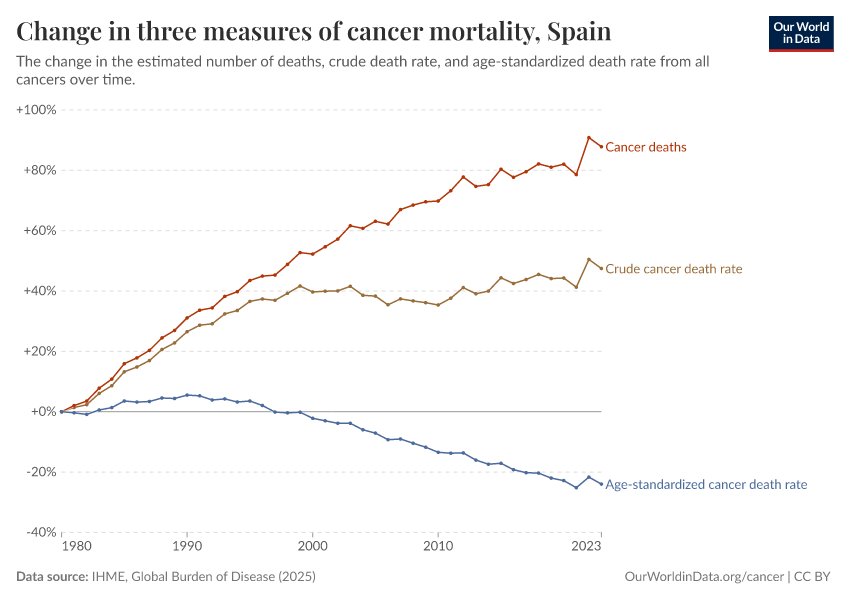
The report indicates that of all deaths recorded in Spain in 2025, 95.7% were due to natural causes, while the remaining 4.3% were from external causes. Among natural causes, tumors remained the leading factor, accounting for 26.3% of total deaths. Circulatory system diseases followed closely at 25.7%. Together, these two categories accounted for over half of all deaths in the country, largely continuing recent trends.
Respiratory Diseases: The Fastest-Growing Health Warning
Although tumors and circulatory diseases ranked first and second in total numbers, the trend for respiratory diseases is more pronounced. Data shows that in 2025, deaths from respiratory diseases accounted for 12.4% of total fatalities, a 9% surge compared to 2024. This significant growth rate makes it one of the most alarming health indicators.
External Causes: Accidental Falls are the Leading Cause for the Third Year Running
Regarding deaths from external causes, a total of 19,042 people died in 2025, an increase of 3.8% year-over-year.
Among these, accidental falls were the leading cause of accidental death in Spain for the third consecutive year, causing 4,814 deaths, an 8.2% increase from the previous year. This was followed by deaths from accidents such as drowning and suffocation, totaling 3,899 people. Suicide was the third leading external cause, with 3,808 people taking their own lives. On a positive note, deaths from traffic accidents decreased by 4.3%.
Regional Disparities: A Clear North-South Health Divide
Geographically, there are significant health disparities among Spain’s autonomous communities. Northern regions generally have higher mortality rates. For example, Asturias, Castile and León, and Galicia rank among the highest in the country for deaths from tumors and circulatory diseases. Notably, the autonomous community of Galicia has the highest mortality rate from respiratory diseases nationwide.
In contrast, regions such as Madrid, the Balearic Islands, and the North African enclaves of Ceuta and Melilla have significantly lower mortality rates for these diseases, reflecting potential gaps in healthcare resources, lifestyle habits, and environmental factors between regions.
