Overall Situation: A Worsening Self-Perception
According to the sixth edition of the “Global Mind Health Report,” commissioned by the AXA insurance group and conducted by the market research firm Ipsos, Spain’s mental health situation is raising alarm bells. The survey, which covers nearly 19,000 respondents across 18 countries, shows that 33% of Spanish participants believe they suffer from a mental health disorder. This figure indicates a steady upward trend, rising from 26% and 31% in previous years. This rate of decline places Spain among the European countries with the poorest self-perceived mental health, alongside the UK, Ireland, and Turkey.
Discrepancy Between Index and Perception
Despite this pessimistic subjective feeling, a noteworthy detail in the report is that Spain scored 62.3 out of 100 on the comprehensive mental health index, slightly above the global average of 61.8. This suggests that the core issue may not be a sharp increase in actual clinical diagnosis rates, but rather a societal-level phenomenon where more people, particularly in their subjective experience, feel they are “not doing well psychologically.” This highlights a gap between subjective well-being and objective metrics.
Youth Crisis: The Group Under the Most Pressure
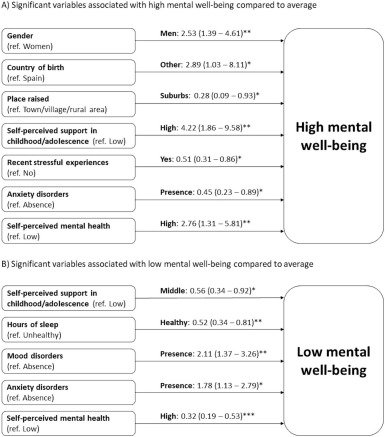
The most striking data in the report comes from the younger generation. Among the 25 to 34 age group, a staggering 44% of respondents believe they have a mental health issue, a figure far exceeding the national average of 33%. This means nearly half of the population in this age bracket in Spain is experiencing psychological distress. Experts analyze that multiple factors contribute to this group being under the most pressure, including housing difficulties, job market instability, continuous academic pressure, comparison anxiety fueled by social media, and the collective psychological trauma left in the wake of the COVID-19 pandemic.
Practical Barriers to Seeking Help
Recognizing the problem is only the first step; obtaining effective support faces numerous obstacles. The report clearly states that economic factors are the biggest barrier for Spaniards seeking mental health services. The high cost of private psychotherapy deters many people. At the same time, chronic underfunding of psychiatric and psychological resources within the public healthcare system leads to excessively long waiting times for appointments. This huge gap between supply and demand forces a large number of people who know they need help to “tough it out” on their own.
Spain’s Predicament in the European Context
From a broader perspective, the decline in mental health is a common challenge facing all of Europe. Rising living and housing costs, anxiety about climate change, and geopolitical uncertainty have collectively had a negative impact on the psychological state of people across European nations. However, Spain’s situation is particularly unique, as its public healthcare system’s investment in mental health services started from a lower base than many other European countries. Against the backdrop of surging demand, these pre-existing resource shortcomings are further amplified, making Spain appear particularly vulnerable in addressing this crisis.
