Tourist Numbers and Spending Shatter Historical Records
Data released by Spain’s National Statistics Institute (INE) on July 2, 2026, shows that the Spanish tourism industry is experiencing an unprecedented boom. In May 2026, Spain welcomed 10.6 million foreign tourists, marking the first time the 10 million mark has been surpassed in May, a 9.5% increase compared to the same period in 2025.
Even more striking is the growth in tourist spending. During the month, international tourists spent a total of €13.553 billion in Spain, a year-on-year increase of 10.9%, also setting a new record for May in INE’s recorded history.
Looking at the cumulative data for 2026, from January to May, Spain received 36.8 million international tourists, a 5% increase year-on-year. During the same period, total tourism spending reached €50.257 billion, up by 7.8%. Both figures set new historical highs. This series of record-breaking data lays a solid foundation for Spain to achieve its ambitious goal of receiving “100 million tourists” for the year.
Key European Markets Drive Growth
Traditional European source markets continue to be the core drivers of Spain’s tourism growth. In May, tourists from the United Kingdom, France, and Germany were the top three nationalities.
- United Kingdom: Led the way with 2.18 million tourists, an increase of 6.1%, accounting for 18.5% of total spending.
- France: Welcomed 1.31 million tourists, a significant increase of 11.1%.
- Germany: Received approximately 1.26 million tourists, a 9% increase, with their spending making up 11.1% of the total.
In terms of cumulative data from January to May, the United Kingdom remains the largest source market with 7.03 million tourists (a 3.6% increase), followed by France (over 4.64 million, up 1.5%) and Germany (over 4.51 million, up 0.3%).
Popular Destinations Center on Coastal Regions
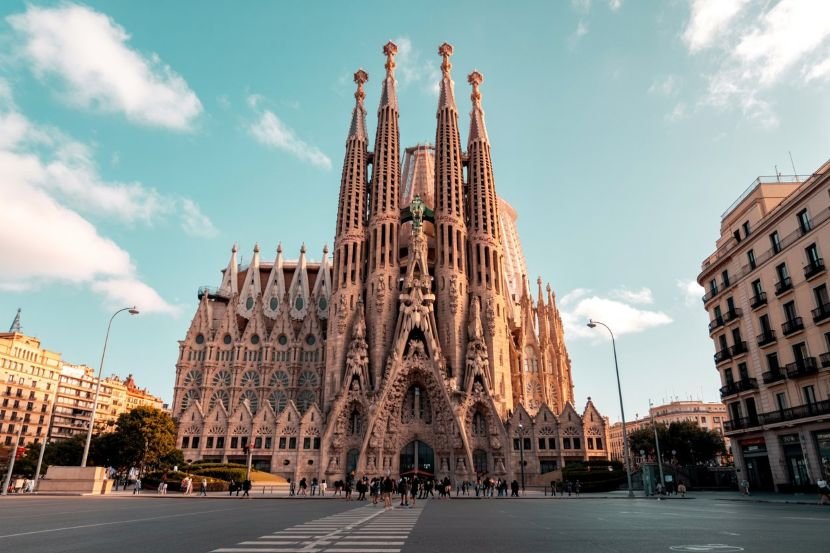
Spain’s sun and beaches continue to attract global visitors, with coastal areas remaining the top choice for tourists.
In May 2026, the autonomous community of Catalonia attracted the most tourists, accounting for 21.1% of the total, with a 13.1% year-on-year increase in visitor numbers. It was closely followed by the Balearic Islands, which captured a 20.6% share with a 5.2% increase. Andalusia ranked third, with a 15.9% share and a strong growth of 12.7%.
In the cumulative rankings for the first five months of 2026, Catalonia (7.5 million tourists), the Canary Islands (6.8 million tourists), and Andalusia (5.8 million tourists) were the top three regions for tourist arrivals.
New Trends in Tourist Accommodation and Length of Stay
Data indicates that tourist travel patterns are changing. In May 2026, short-to-medium stays of 4 to 7 nights were the most common, attracting about 5.4 million tourists, a 14.1% increase. In contrast, the number of long-stay tourists (over 15 nights) saw a decrease of 3.7%.
Regarding accommodation choices, commercial accommodation (hotels, rental properties, etc.) remains the primary option, hosting 8.74 million tourists, an increase of 7.4%. The demand for rental properties was exceptionally strong, with the number of tourists growing by 26% to 1.25 million. Meanwhile, the number of tourists opting for non-commercial accommodation (such as their own second homes or staying with friends and relatives) grew even faster, reaching 1.51 million, a surge of 23.2% year-on-year, indicating a rise in more diversified accommodation preferences.
