Overall Unemployment Rate Remains High, Far Exceeding EU Average
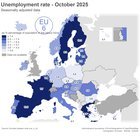
Eurostat recently released its latest report on the job markets of member states. The data shows that as of May 2026, Spain’s unemployment rate was recorded at 10.3%, remaining relatively stable compared to the previous month. However, this figure is the second highest among the 27 EU countries, surpassed only by Finland’s 10.6%. Compared to the EU average of 5.9% and the Eurozone average of 6.2%, the pressure on Spain’s job market is particularly pronounced. The data reveals that while the overall number of unemployed people in the EU has decreased year-on-year, the gap between Spain and countries like Germany, the Netherlands, and Poland, which maintain unemployment rates around 3%, remains vast, highlighting its ongoing struggles in job creation.
Youth Employment Crisis: Unemployment Rate Ranks Third Highest in the EU
Spain’s younger generation is facing an even more severe employment situation. The data shows that the unemployment rate for people under 25 is a staggering 23.7%, the third highest in the EU, behind only Sweden (24.4%) and Finland (23.9%). This means that nearly a quarter of young job seekers in Spain cannot find work. In contrast, the youth employment situation in some other EU countries is much more optimistic, with Germany’s youth unemployment rate at just 7%, Austria’s at 8%, and the Czech Republic’s at 8.4%. This significant data disparity indicates that creating more job opportunities for young people is a critical and urgent challenge for Spain’s socioeconomic development.
Significant Gender Gap in Employment Persists
In addition to high overall and youth unemployment rates, gender inequality is also a prominent issue in Spain’s labor market. The data for May 2026 clearly reveals this gap: the unemployment rate for men was 9%, while for women it reached 11.8%, a difference of nearly three percentage points. This significant gender disparity is also among the highest in the EU member states. Analysts point out that although Spain’s overall employment situation has been slowly improving in recent years, structural problems such as high unemployment, difficulties for young people in finding jobs, and the greater obstacles women face in the job search process remain long-term challenges that the country’s future economic policies must prioritize and address.
