Overall Performance Below International Benchmarks
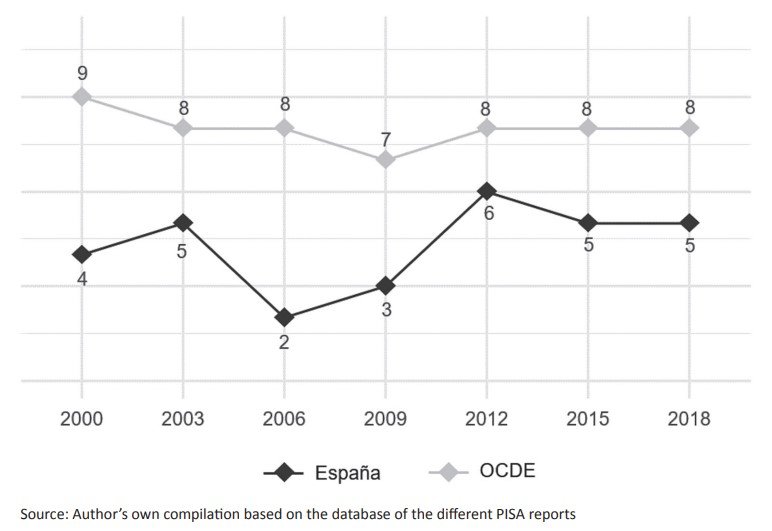
A recent educational study based on data from the Organisation for Economic Co-operation and Development (OECD) indicates that Spain faces challenges in nurturing top-performing students. The report shows that only 10.6% of the nation’s 15-year-old student population is classified as high-achievers. This figure is not only about 3 percentage points lower than the average for OECD member countries but also stands in stark contrast to the over 20% seen in educational powerhouses like South Korea, Japan, and Canada.
A deeper data analysis reveals that only 1.6% of Spanish students achieved the highest level of proficiency in any single PISA (Programme for International Student Assessment) test—mathematics, reading, or science. This figure is just half the OECD average, highlighting Spain’s shortcomings in developing top-tier talent.
Significant Disparities in Regional Education Levels
The research also uncovers a huge gap in educational outcomes among Spain’s autonomous communities. Data shows that some regions outperform the international average, with Castilla y León, La Rioja, Asturias, Madrid, and Cantabria having higher proportions of high-achieving students.
In contrast, the performance in other regions is less optimistic. The Canary Islands (Canarias) and Castilla-La Mancha have fewer than 7% high-achieving students, making them the regions with relatively weaker educational performance nationwide.
Family Background as a Decisive Factor
One of the study’s most significant findings is that a student’s socioeconomic and cultural background, rather than the type of school they attend, is the most critical variable in predicting their academic performance. Data shows that 21.2% of students from high-income, highly-educated families become high-achievers. However, for students from low-income families, this figure plummets to less than 5%, a stark disparity.
Although data indicates that private schools have a higher percentage of excellent students (14.8%) compared to public schools (8.7%), researchers found that after controlling for confounding factors like family background, the type of school ownership itself is not the decisive factor. The report emphasizes that a positive and safe school environment, particularly one that effectively reduces bullying, is equally crucial for students’ healthy development and academic success.
Profile of High-Achieving Students and Their Environment
The report also analyzes the characteristics of Spain’s high-achieving students. In terms of gender, girls generally show a stronger advantage in reading ability, while boys tend to excel more in mathematics and science.
These high-performing students share several common traits: the vast majority have never had to repeat a grade, hold clear aspirations for university, and are in good physical and mental health. Furthermore, their home environments show commonalities, often coming from families that provide moderate support and encourage independence without exerting excessive pressure. The study concludes that to raise Spain’s overall educational standards, the core task is to effectively reduce the inequality in educational opportunities stemming from differences in family background.
