Survey Overview: Widespread Pesticide Residues in European Strawberries
A new report released by the Pesticide Action Network Europe (PAN Europe), in collaboration with environmental organizations from 11 EU member states, has revealed the widespread issue of pesticide residues in European strawberries. The survey tested samples from Austria, Belgium, Croatia, France, Germany, Hungary, Ireland, Italy, the Netherlands, Slovenia, and Spain, with results showing that a staggering 88% of samples contained pesticide residues. The level of contamination in some samples is concerning; for instance, a sample from Belgium was found to contain 9 different pesticides, while samples from Hungary and Ireland contained 8 and 7, respectively.
Spain: Better-Than-Average Pesticide Residue Levels
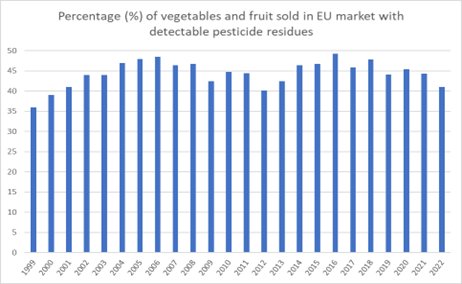
In contrast to the overall European situation, Spanish strawberries performed remarkably well in this analysis. The report’s data shows that, among all Spanish samples, a maximum of only 2 types of pesticides were detected. Furthermore, the proportion of samples containing pesticide residues was significantly lower than in other major strawberry-producing countries. Ecologistas en Acción, the Spanish environmental group involved in the survey, noted that some conventionally grown Spanish strawberries even achieved zero pesticide residue, demonstrating the potential and capability of Spanish agriculture in ensuring food safety.
Organic Certification: A Guarantee of Zero Residues
The report reached an indisputable conclusion: no pesticide residues were found in any of the organic strawberry samples tested, regardless of their country of origin. This finding offers clear and reliable guidance for consumers who wish to completely avoid pesticide risks, confirming that organic certification is the safest option currently available on the market.
The EU Policy Debate Behind the Report
This report is released amidst ongoing controversy over the EU’s pesticide management policies. The European Commission had previously introduced its “Farm to Fork” strategy, which aimed to cut the use of chemical pesticides by 50% by 2030. However, progress on this ambitious goal has been slow due to pressure from powerful agricultural lobbying groups. Currently, the EU still authorizes the use of about 450 different pesticides, and whether their safety limits are sufficient to protect vulnerable groups like children and pregnant women remains a key concern for environmental and health organizations.
Buying Advice for Consumers
Based on the report’s findings, consumers can consider the following tips when buying strawberries. First, pay attention to the origin label; the survey indicates that strawberries from Spain (particularly from Huelva in Andalusia, one of Europe’s main export regions) are a relatively low-risk option. Second, if your budget allows, choosing organic strawberries is the most effective way to ensure they are free of pesticide residues. Finally, it’s crucial to recognize that even within the EU, food safety standards and enforcement can vary between countries, making informed consumer choices essential.
