Public Showdown at NATO Summit
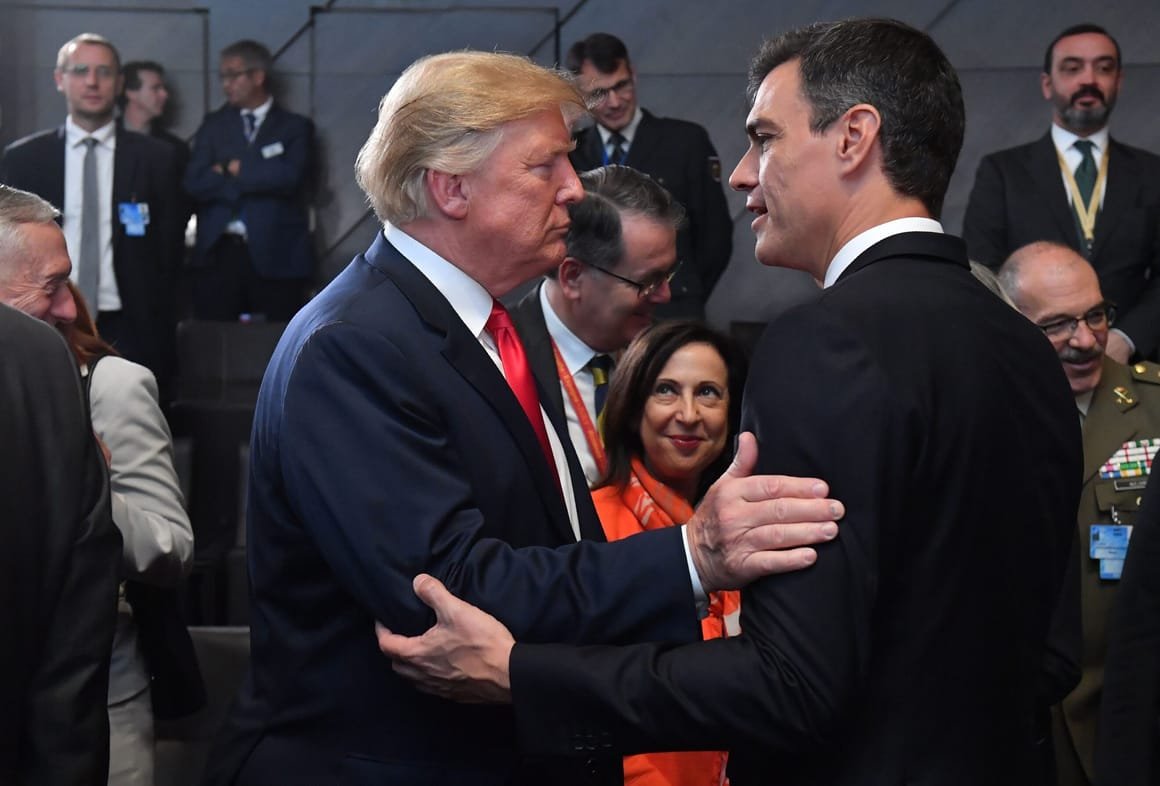
On July 8, 2026, during a NATO summit in Ankara, the capital of Turkey, the atmosphere at a press conference grew suddenly tense. U.S. President Donald Trump, appearing alongside NATO Secretary General Mark Rutte, announced a radical directive: he had instructed U.S. Treasury Secretary Scott Benson to prepare for a complete suspension of all bilateral trade between the United States and Spain.
Trump made no secret of his disappointment with Spain, describing it as a “terrible ally” within the NATO alliance and deeming the relationship “beyond saving.” This public ultimatum marked the open declaration of conflict between the two traditional allies.
5% vs. 2%: The Fundamental Disagreement on Defense Spending
The core of the conflict between the U.S. and Spain lies in the issue of defense budgets. The Trump administration has been adamant in demanding that all NATO members increase their defense spending to 5% of their respective Gross Domestic Product (GDP). However, the Spanish government, led by Prime Minister Pedro Sánchez, has maintained its established policy of a 2% military spending-to-GDP ratio, explicitly rejecting the U.S. demand for an increase.
This significant numerical gap reflects a fundamental divergence in their views on alliance responsibilities and fiscal policy, becoming the direct trigger for the dispute.
Military Base Dispute and Escalating Tensions
The tensions between the two countries are not new. As early as March 2026, Spain had refused the U.S. military’s request to use its key military bases in Rota and Morón de la Frontera for airstrikes against Iran. At that time, Trump had already hinted at taking economic retaliatory measures. His threat at the NATO summit is widely seen as a further escalation of his previous warnings.
Furthermore, Prime Minister Sánchez attended the Ankara summit alone. It is understood that his wife, Begoña Gómez, was unable to accompany him as her passport had been seized by a judge, a detail that indirectly highlights the dual pressures, both domestic and international, facing the Sánchez government.
Market Shock and Reactions
Trump’s threat of a trade embargo immediately sent ripples of anxiety through European markets, causing stock markets to fall. It is believed that if the ban were to be implemented, Spain’s export-reliant agriculture, automotive manufacturing, and vital tourism sectors would suffer devastating blows.
Despite this, the Spanish government responded with relative calm, stating that there was “nothing new” in Trump’s remarks. Analysts also point out that it remains uncertain whether Trump will follow through on his threat, as he has issued similar warnings to Spain in the past without taking action. Regardless of the outcome, the incident has severely weakened NATO’s internal unity and cast a dark shadow over the relationship between the two allies.
