A Historic Journey: The Keichō Embassy
The story begins in 1614, when the Keichō Embassy to Europe, led by the samurai Hasekura Tsunenaga, arrived in Spain. The mission, on behalf of the lord of Sendai, was to establish direct diplomatic and trade relations with the King of Spain and the Holy See. Their fleet eventually docked in Coria del Río, a town in the province of Seville, Andalusia, marking the starting point of this historical tale.
A Twist of Fate: Stranded in a Foreign Land
While the embassy was carrying out its diplomatic mission in Europe, the political landscape in Japan underwent a fundamental shift. The ruling Tokugawa Shogunate began to enforce its anti-Christian edicts, persecuting Catholics nationwide, and subsequently implemented the ‘sakoku’ (closed country) policy that would last for over two centuries. As some members of the delegation had converted to Catholicism, returning to Japan meant facing immense political risk and even death. Against this backdrop, a number of samurai, sailors, and attendants from the mission ultimately decided not to return home, choosing to remain in Spain.
The Origin of the ‘Japón’ Surname
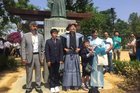
These Japanese settlers chose to put down roots in Coria del Río, the town where they first landed. They married local Spanish women and gradually integrated into the community. When it came to civil registration, their Japanese names were difficult for Spanish officials of the time to spell and record. The authorities adopted a direct and uniform solution: they assigned ‘Japón’, the Spanish word for their country of origin, as their official surname. This unique surname was thus born and has been passed down through generations for over four centuries.
Four Centuries of Heritage and Fusion
Today, in the small town of Coria del Río, with a population of about 30,000, there are approximately 1,400 descendants bearing the ‘Japón’ surname. After more than 400 years of intermarriage and genetic blending, their physical appearance is indistinguishable from that of other Andalusians, and they no longer speak Japanese. Nevertheless, they are immensely proud of their unique surname and the history behind it. The town treasures this history as a valuable cultural asset, not only erecting a bronze statue of the embassy’s leader, Hasekura Tsunenaga, but also frequently hosting cultural exchange events related to Japan. Members of the Japanese Imperial Family have even visited to connect with these ‘distant relatives,’ celebrating a remarkable bond that transcends borders and centuries.
