Madrid Secures €1 Billion Tech Investment, Strengthening Its Position in the Data Industry
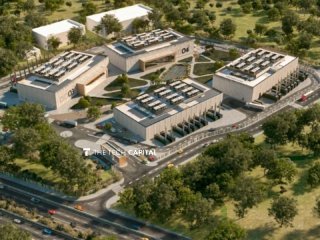
Isabel Díaz Ayuso, President of the Community of Madrid, revealed in a recent interview that a €1 billion project, driven by the Spanish infrastructure company Ferrovial, will establish a large data center campus in the municipality of Alcobendas. Ayuso stated that this move signifies Madrid’s emergence as one of the world’s key regions for the Artificial Intelligence (AI) and data industry.
Currently, international tech giants such as Google, Amazon, and Oracle have already deployed data centers and related operations in the Madrid region. Ayuso pointed out that sustained international investment is rapidly transforming Madrid into a global data industry hub. However, she also warned that if the national electricity infrastructure planning fails to meet demand, it could hinder future investments. The regional government estimates that approximately €16 billion in potential investments has already been affected.
Looking to 2040: Unveiling a Long-Term Urban Development Plan
In addition to progress in the tech sector, Ayuso detailed for the first time the ‘2040 Development Plan’ for the Madrid region, which looks 15 to 20 years into the future. The plan aims to address future population growth and urban development needs with specific measures, including:
- Healthcare System: Building 34 new hospitals and continuing to modernize existing major hospitals.
- Social Services: Adding 40 new nursing homes and constructing more community health centers.
- Infrastructure: Proactively planning new metro lines to accommodate population expansion and ensuring the reliability of public services like water supply.
She emphasized that the government’s goal is to drive urban development while preserving Madrid’s unique neighborhood culture and way of life.
Smart Healthcare Pilot: AI Technology Enters Hospitals
In the healthcare sector, digital innovation has become a development priority. Ayuso announced that the Ramón y Cajal University Hospital (Hospital Universitario Ramón y Cajal) in Madrid has launched a smart healthcare pilot program.
The project uses a home monitoring system that allows patients to track vital signs and medication levels in real-time from home. Doctors can remotely analyze this data for early warning and intervention for high-risk conditions such as strokes and myocardial infarctions. The plan is to gradually roll out this telemedicine system across the entire Madrid healthcare network.
Economic Outlook and Challenges
Ayuso believes Madrid is in its “prime moment” and plans to continue promoting urban expansion, infrastructure construction, and tech industry development to attract more businesses and people. However, she also noted that the region faces multiple challenges.
She criticized the central government’s approach to energy planning, fiscal allocation, and investment policies, arguing they have weakened investor confidence. Furthermore, with a growing population, housing shortages and a lack of doctors remain key issues to be addressed. Regarding the recent social debate on sick leave policies, Ayuso stated that a balance must be found between protecting the rights of sick employees and preventing abuse of the system to alleviate the pressure of absenteeism costs on businesses.
On the cultural front, Ayuso also mentioned that this summer, Madrid will host community ballet performances, a youth symphony orchestra tour, and a series of science outreach activities centered around the solar eclipse to enrich the cultural life of its citizens.
