Significant Gap Between Pension and Wage Growth
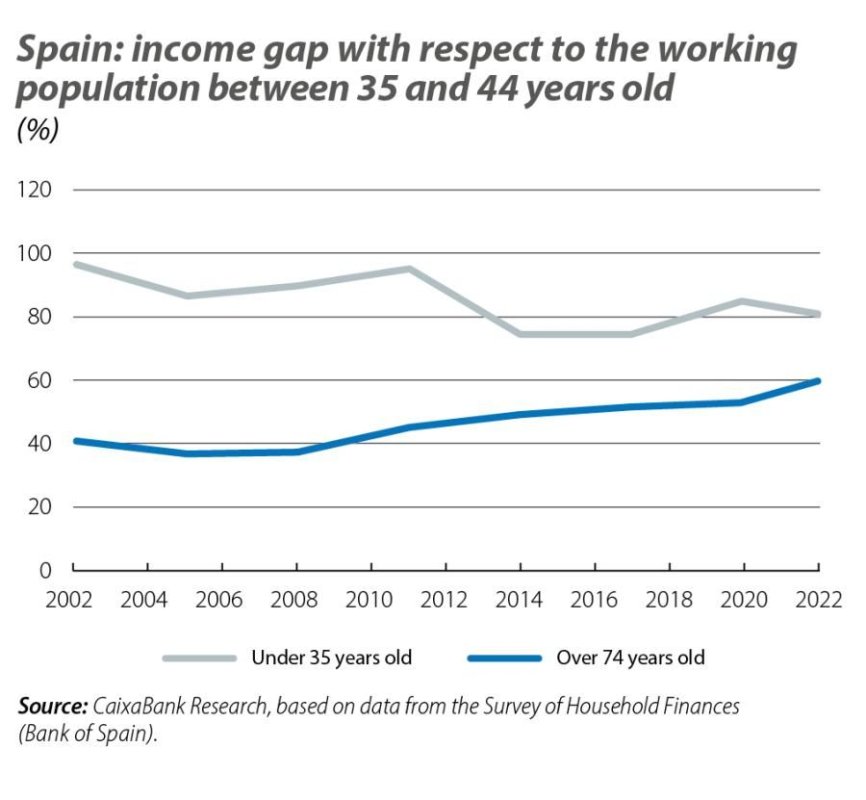
According to a recent study by consulting firm KPMG, between 2011 and 2024, the average retirement pension in Spain saw a cumulative increase of 57.07%, while the average wage grew by only 29.53% over the same period. This means pension growth was nearly double that of wages, widening the gap between the two.
Specifically, the average monthly retirement pension in Spain rose from €923.1 in 2011 to €1449.9 in 2024. In contrast, the national average monthly wage increased from €1841.8 in 2011 to €2385.6 in 2024. As wages are the primary source of funding for the social security system, their much slower growth compared to pension expenditures signals a growing challenge for the public pension system’s financial balance.
Policy and Inflation Drive Rapid Pension Increases
The report notes that the rapid growth in Spanish pensions began primarily in 2022. That year, the Spanish government implemented a pension reform that re-linked annual pension adjustments to the Consumer Price Index (CPI). Amid the high inflation and energy crisis of the post-pandemic era, this mechanism led to significant pension hikes for two consecutive years.
In 2023, pensions saw a year-on-year increase of 9.41%, the largest in recent years, followed by another 5.19% rise in 2024. Additionally, the new wave of retirees, who generally have longer contribution histories and higher contribution bases, has also pushed up the overall average pension level.
Population Aging Exacerbates Long-Term Fiscal Pressure
Demographic shifts are another key factor intensifying the pressure on the pension system. As the large ‘baby boomer’ generation progressively reaches retirement age, Spanish society is rapidly aging. The report predicts that by 2050, over 30% of Spain’s population will be 65 or older.
At that point, the old-age dependency ratio (the ratio of retirees to the working-age population), which measures the societal pension burden, is projected to soar from the current 38.6 to 78.4, approaching a level where nearly one worker supports one retiree. This trend will cause public pension expenditure as a percentage of GDP to climb from its current level of around 13.7% to between 16.8% and 17.3%.
The Present and Future of Spain’s Pension System
Despite the challenges, Spain’s social security system has shown resilience. The number of pensioners grew from 7.8 million in 2011 to 9.1 million in 2024, but the number of social security contributors also continued to rise, surpassing 22.4 million for the first time in the first half of 2024, providing financial support for pension payments.
According to data from the Organisation for Economic Co-operation and Development (OECD), Spain’s public pension replacement rate (the ratio of pension to pre-retirement salary) is approximately 80.4%, significantly higher than the OECD average of about 50.7%. However, experts point out that Spain’s pension security relies heavily on the public system, with the private supplementary pension system being relatively underdeveloped. As the retiree population continues to grow, ensuring the long-term sustainability of the public pension system will be a major test for Spain.
