Coordinated Raids Target Online Extremism
The General Intelligence Commissariat of Spain’s National Police recently led a large-scale counter-terrorism operation, conducted simultaneously in Madrid, Barcelona, Ceuta, and Toledo, successfully arresting four individuals suspected of supporting the extremist group ‘Islamic State’ (ISIS).
According to information released by the Spanish Ministry of the Interior, the four used social media platforms to build a contact network, sharing and spreading propaganda materials that support global violent ‘jihad.’ Police believe their activities posed a potential threat to national security.
Suspects Highly Radicalized, One Planned to Travel to Conflict Zone
The investigation revealed that all arrested suspects showed signs of high radicalization, fully embracing the violent doctrine of the ‘Islamic State.’ They frequently visited specific online platforms to actively consume the organization’s propaganda and training materials for self-radicalization.
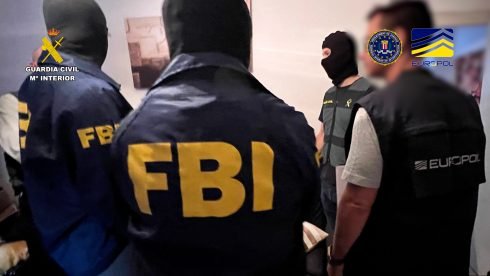
Among them, the case of a female suspect arrested in Toledo is particularly noteworthy. She had explicitly stated her intention to travel to a conflict zone in the Middle East to join the ‘Islamic State’ and had already purchased a plane ticket to Turkey. Fearing her imminent departure, investigators decided to move forward with the arrest. The woman has since been placed in pre-trial detention by court order.
Facing Multiple Terrorism-Related Charges
Police have initially brought several charges against the four suspects, including alleged involvement in indoctrination, self-training, and public glorification of terrorism.
Investigators noted that some of the suspects were not just passive consumers of extremist ideology but also possessed the capability to actively spread and indoctrinate others with these concepts. They had repeatedly published statements glorifying terrorism in online spaces in an attempt to expand their influence.
Key Evidence Seized, Investigation Ongoing
During the operation, police searched three residences, seizing multiple computers, mobile phones, and other electronic devices, as well as related documents. Currently, technical experts from law enforcement are conducting an in-depth analysis of these devices and materials to fully map out the suspects’ contact network, their specific activities, and to determine if there are other potential accomplices.
