Grim Toll: 12 Dead, Identification Proves Difficult
The wildfire in the province of Almería (Costa de Almería), Andalusia, Spain, has had devastating consequences. According to the latest official data, the fire has resulted in 12 confirmed deaths and 23 people missing. A total of 1,448 residents were forced to evacuate their homes, with 164 still housed in temporary shelters. The blaze has consumed over 6,600 hectares of land, turning once-green mountains into a scorched landscape.
Due to the intensity of the fire, the victims’ remains are severely damaged, rendering conventional identification methods ineffective. The President of the Government of Andalusia, Juanma Moreno, stated that many bodies were carbonized, making the situation extremely complex. The Spanish Civil Guard’s Criminalistics Department has successfully extracted DNA genetic profiles from all 12 victims and is awaiting DNA samples from their families, who are traveling from countries like the UK and Belgium, for comparison. According to initial information, the vast majority of the victims were foreign citizens residing in the area, primarily from the United Kingdom and Belgium. Four were discovered in a burnt-out car, while another seven died while attempting to flee on foot.
Firefighting Progress: A Brief “Window of Opportunity”
As weather conditions have improved, with humidity rising to 50% and winds significantly weakening, a turning point has been reached in the firefighting efforts. The head of emergencies in Andalusia, Antonio Sanz, announced that response teams have seized this favorable moment, shifting their strategy from a “defensive mode” to an “offensive attack.” The weather forecast indicates that humidity will further increase overnight, providing a valuable “window of opportunity” to control and extinguish the remaining hotspots.
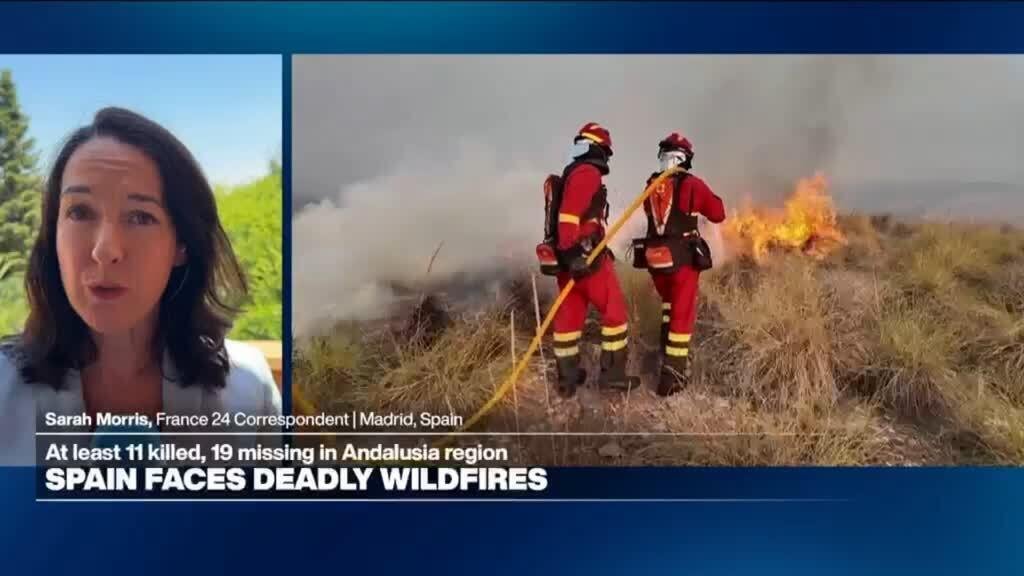
However, this favorable window may not last long. Meteorological models predict that a new heatwave will return next week. The extremely dry ground conditions could then cause any embers not fully extinguished to quickly reignite, posing a renewed threat.
Cause and Controversy: Fallen Pole and Lack of Warning
The cause of this disaster is preliminarily being attributed to human negligence. It is believed that the fire was started when an old, privately-owned utility pole collapsed next to the N-340A highway, causing its power lines to touch the ground. Reports suggest that residents had previously alerted authorities to the dangerous condition of the pole, but their warnings were not adequately addressed.
Furthermore, a key decision in the emergency response is now facing widespread scrutiny: why authorities did not use the ES-Alert system to send emergency evacuation messages to the mobile phones of residents in the affected area. In response, Regional President Moreno explained that technical supervisors at the time judged that a mass alert could have caused even greater chaos among the population. This decision and its consequences are expected to be a central focus of the future investigation into the incident.
Community Sheltering and Mutual Aid
In the face of disaster, community strength has provided support for those affected. Although a large number of residents are still unable to return home due to safety concerns, over 600 evacuees have recently been cleared to go back to their properties. For those still needing accommodation, authorities have set up temporary shelters at the Lubrín theater, the Garrucha sports hall, and the Antas monastery.
Meanwhile, residents and municipal workers from neighboring areas have spontaneously organized to deliver food, water, and other essential supplies to the shelters, demonstrating the warmth of mutual support amidst the tragedy.
