The ‘Lifespan’ of a Security Door: Not a One-Time Fix
A sturdy security door is often seen as a permanent guarantee of home safety, but this is a misconception. According to industry experts in Spain, security doors, like other home fixtures, have a definite lifespan. Over time, the door’s structure, lock, and hardware will degrade due to wear and environmental factors, causing its security performance to decline. If this ‘expiration date’ is ignored, what was once a guardian could become the weakest link in your security chain.
Scientific Assessment: Lifespan and Maintenance Schedule
According to data from security door manufacturers, a standard-quality door, under normal use and with proper maintenance, has an expected lifespan of about 20 to 30 years. This duration can be affected by various factors, including the quality of the door’s materials, the humidity and temperature changes in its environment, and the frequency of daily use. To maximize its lifespan and maintain optimal protection, experts recommend a comprehensive inspection and maintenance at least once a year. This should include cleaning the door panel, lubricating the lock cylinder and hinges, and carefully checking for any loosening or deformation where the frame meets the wall.
Warning Signs: When to Consider a Replacement?
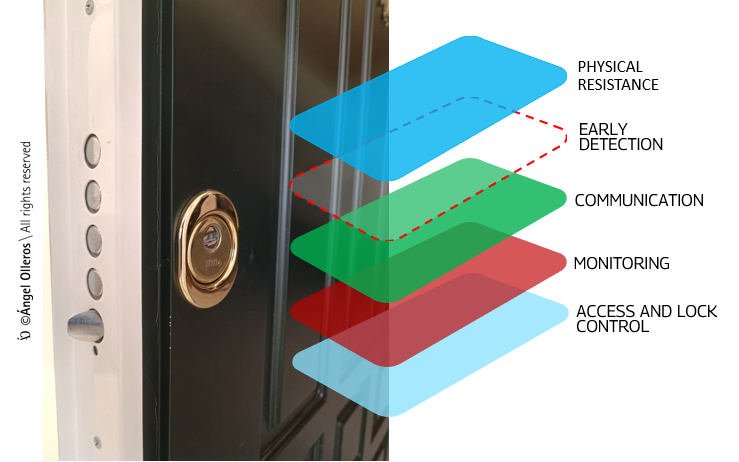
When a security door shows certain signs, it’s a red flag that its security performance is compromised, and you should immediately consider a repair or replacement. These key warning signs include:
- Outdated Lock Technology: Still using an old, low-security level lock cylinder, or a locking system with only a single locking point.
- Unstable Door Structure: The door panel wobbles noticeably when closed, or the bottom of the door scrapes against the floor when opening or closing.
- Damaged or Loose Components: Visible cracks appear on the door frame; the protective cover over the lock (escutcheon) has sunk or become loose.
These issues significantly reduce the door’s resistance to prying and lock-picking, providing vulnerabilities for burglars to exploit.
Technological Evolution: Keeping Up with Security Standards
Beyond physical aging, the evolution of security technology is another critical factor. Many security doors installed over two decades ago may already be obsolete in terms of their lock technology and overall anti-burglary design, even without obvious physical damage. As lock-picking techniques and burglary tools ‘advance,’ outdated security doors may not effectively resist new methods of intrusion. Therefore, experts strongly recommend that residents not only monitor the physical condition of their doors but also regularly assess their technological level. Upgrading the lock cylinder to a high-security product that meets modern standards, or decisively replacing the entire door when necessary, is crucial for providing more reliable and up-to-date protection for your home.
