The Future of Spanish Housing Prices: Transactions Cool While Price Growth Is Set to Lead Europe
The Spanish real estate market is at a complex crossroads, according to the latest forecast from a leading rating agency. On one hand, market transactions and mortgage lending are showing signs of cooling down. On the other hand, due to structural issues, housing prices are expected to experience strong growth in the coming years, potentially leading the rest of Europe.
S&P Forecast: Spain’s Price Growth Poised to Top Europe from 2027
Economists at Standard & Poor’s Global Ratings have indicated that the upward momentum of Spanish housing prices is expected to continue. Their report forecasts that Spain will become the fastest-growing country for housing prices in Europe in 2027 and 2028, with annual increases of 7.4% and 6.2%, respectively. In 2026, Spanish house prices are projected to grow by 9.1%, second only to neighboring Portugal (expected to grow by 10%), placing it second in Europe. The agency believes the core driver of this upward trend is a severe shortage of new housing supply in Spain, which is failing to meet market demand.
Market Snapshot: Home Sales and Mortgages Both Slowing Down
In contrast to the strong future expectations, current transaction activity in the Spanish real estate market is showing signs of weakness. According to data from the Spanish Notary Association, national home sales fell by 4.9% year-on-year in May 2026, marking the fifth consecutive month of year-on-year decline. The drop was even more pronounced for residential properties, with sales falling by 7.6% compared to May 2025. Meanwhile, after more than two years of continuous growth, the issuance of mortgages has also begun to contract.
However, market performance is not uniform, with significant regional variations. For example, the Andalusia region bucked the trend with a 4.3% increase in home sales, becoming a market outlier. In contrast, Melilla (-31%), Cantabria (-26.2%), and the Balearic Islands experienced the steepest declines in transactions.
Price Trends: Cooling Transactions Fail to Curb Rising Prices
Despite the slowdown in transaction activity, Spanish house prices have not stopped their upward climb, although the pace has moderated. According to data from the appraisal company Gesvalt Tasaciones, the average price of a home in Spain reached €2,041 per square meter by the end of the second quarter of 2026, a year-on-year increase of over 12% and a 1.4% increase from the previous quarter.
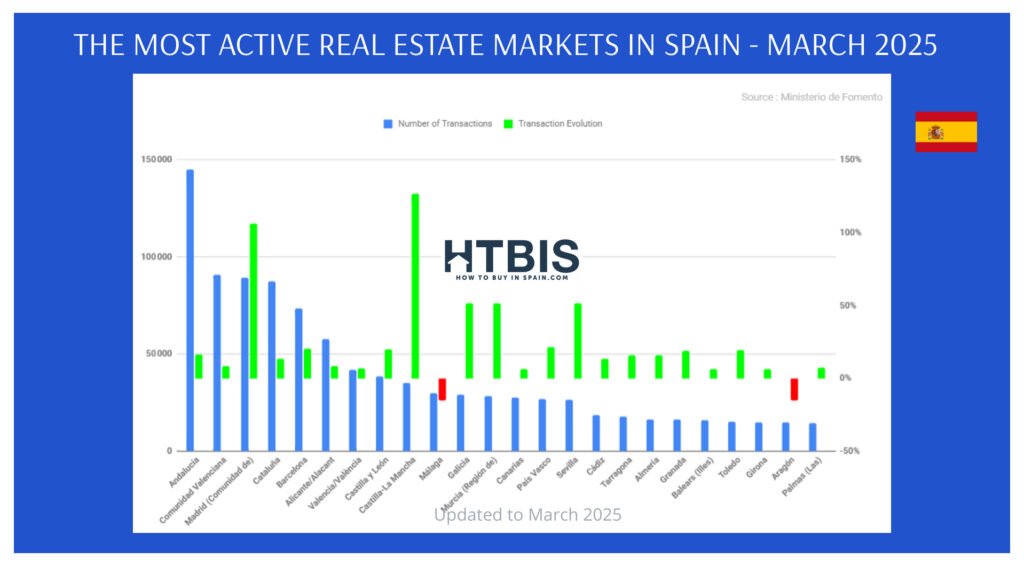
A specific example illustrates this price change clearly: buying a standard 90-square-meter home in Spain now costs an average of €183,690. In the same period in 2025, the same property would have cost only €163,440, meaning the cost of buying a home has increased by over €20,000 in just one year.
Investment Watch: Rising Prices Erode Rental Investment Yields
The continuous rise in property prices is a double-edged sword for investment-oriented buyers. While the value of the asset is increasing, the higher purchase cost is leading to a decrease in the profitability of rental investments. According to data analysis from the leading Spanish property portal Idealista, the average rental yield for residential properties in Spain fell to 6.5% in the second quarter of 2026, down from 7.2% in the same period last year.
Regionally, there are also significant differences in investment returns. Cities like Murcia (7.3%) and Zamora (7.2%) offer relatively high yields, with Jaén topping the list at 7.4%. On the other hand, San Sebastián, with its high property prices, is one of the cities with the lowest rental yields, at just 3.4%.
