Transaction Volume Declines for Fifth Consecutive Month, Signaling a Clear Cooling Trend
Data released by the Spanish National Statistics Institute (INE) reveals that the Spanish real estate market experienced a significant cooling in May 2026. A total of 56,462 residential property sales were recorded during the month, a substantial decrease of 7.3% compared to the same period last year. This drop is not only the largest since the beginning of 2026 but also marks the fifth consecutive month of year-on-year decline in market transaction volume.
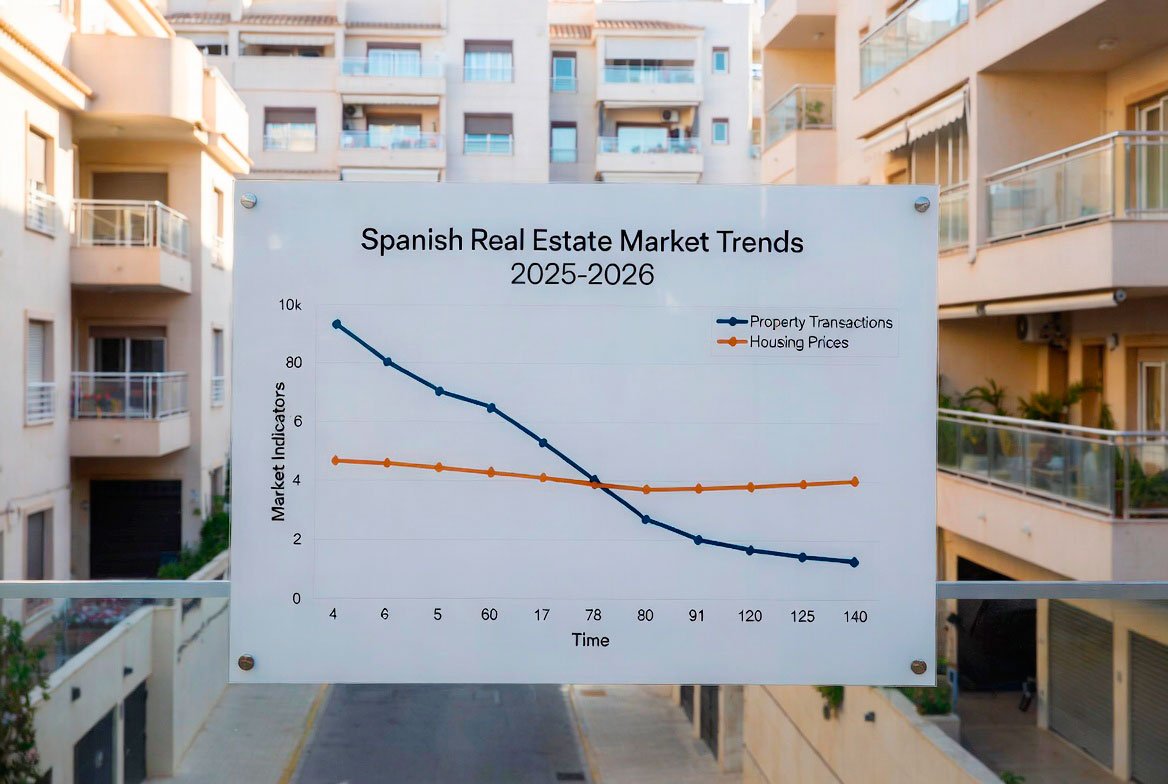
Looking back at the first few months of 2026, the trend of declining transaction volume has gradually intensified: a 5% year-on-year drop in January, declines of 0.5% and 2.2% in February and March respectively, a slight dip of 1.8% in April, and the 7.3% drop in May indicates that the market cooling is accelerating. From the beginning of the year to the end of May, cumulative home sales in Spain reached 288,000 units, a 3.4% decrease compared to the same period in 2025.
Falling Sales, Rising Prices: Property Prices Continue to Climb to Historic Highs
In stark contrast to the shrinking transaction volume, Spanish property prices continue to rise. Data shows that in the second quarter of 2026, the average national housing price reached €2,041 per square meter, a year-on-year increase of over 12%, placing prices at a historic high. Although the quarter-on-quarter growth has slowed to 1.4% from its previous peak, the continued upward trend in prices, coupled with the decline in sales, creates a diverging scenario of ‘falling volume, rising prices,’ exacerbating the burden on potential homebuyers.
Regional Market Divergence and Worsening Decline in Social Housing Sales
At the regional level, the market cooling is widespread, but divergence persists. Of the 17 autonomous communities, 15 saw a year-on-year decline in home sales. Cantabria (-28.6%), Murcia (-19.1%), and the Balearic Islands (-16.8%) experienced the steepest drops. Among the three core markets, sales fell by 11.2% in the Community of Madrid and 10.8% in the Valencian Community, while Catalonia remained relatively stable with a 5.6% decrease. Only Extremadura (+2.6%) and Andalusia (+2.2%) recorded slight growth.
Meanwhile, the market for social housing (vivienda protegida) is facing an even more severe situation. In May, only 3,631 units of this type were sold, a sharp 8.3% year-on-year drop, with its share of total sales falling to 6.4%. In the first five months of the year, the cumulative decline in social housing sales reached 8.2%, far exceeding the overall market decline, indicating that the purchasing power of low- and middle-income groups is being hit the hardest.
Financial Sector Warning: Mortgage Growth Nears Stagnation
The market chill has spread from the transaction side to the financial sector. In May 2026, the number of new housing loans signed in Spain grew by a mere 0.5% year-on-year, a level close to zero growth after 23 consecutive months of significant positive increases. This signal clearly indicates that the credit market’s expansion cycle may be coming to an end.
Currently, purchases financed by mortgages account for 74% of total transactions, meaning the proportion of all-cash buyers continues to decrease, and the market’s reliance on credit is growing. With an uncertain interest rate outlook, a tightening of credit or an increase in borrowing costs will further limit the ability of marginal buyers to enter the market.
Expert Perspective: Market Entering a Period of Structural Adjustment
Analysts point out that the Spanish real estate market is currently undergoing a structural adjustment. The growing conflict between high property prices and the limited purchasing power of residents has become the main barrier to transactions. This pressure is forcing a portion of housing demand to shift to the rental market, thereby driving up rental prices. The interconnected and compounding pressures in both the sales and rental markets are trapping Spain’s housing issue in a complex dilemma.
