Overall Data: Absenteeism Reaches New Highs
According to the latest report from international human resources services firm Randstad, employee absenteeism in Spain continued to worsen in the first quarter of 2026, with the national absenteeism rate climbing to 7.6%, a new historical record. This figure means that approximately 1.603 million employees in Spain’s labor market were absent from work each day for various reasons.
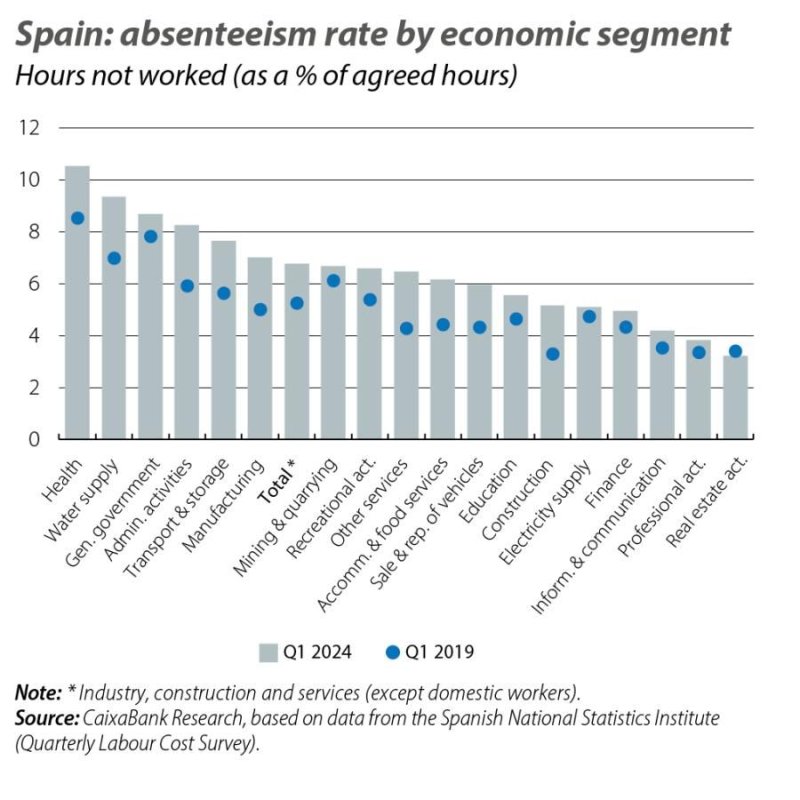
The report further indicates that among all absent employees, around 1.24 million were on sick leave due to temporary disability (Incapacidad Temporal, IT), a 4% increase compared to the same period last year. Analysts believe that the continuously rising absenteeism rate has evolved from a cyclical issue into a structural challenge affecting the Spanish labor market.
Sectoral Differences: Service Industry Hit Hardest
A look at specific data across different sectors reveals a highly uneven distribution of absenteeism. Service-related fields have become the hardest-hit areas with the highest rates:
- Postal and Courier Services: With an absenteeism rate of 13.5%, this sector tops the list.
- Gambling and Betting Activities: Following closely with a rate of 12%.
- Waste Collection and Treatment: Experiencing an absenteeism rate of 10.2%.
In stark contrast, some knowledge-intensive and professional service industries maintain high attendance rates. For example, the employment services sector has an absenteeism rate of just 3%, one of the lowest in the country. Additionally, sectors such as publishing, real estate, information services, and scientific research and development also report rates significantly below the national average.
Regional Distribution: A Clear North-South Divide
Absenteeism rates also show significant geographical differences among Spain’s autonomous communities. The situation is generally more severe in the northern regions compared to the south and central areas.
The three autonomous communities with the highest absenteeism rates are located in the north and in Spain’s overseas territories:
- Basque Country: 9.4%
- Asturias: 9.1%
- Canary Islands: 8.9%
Conversely, the regions with the best performance include:
- Balearic Islands: 5.9%
- Community of Madrid: 6.2%
- La Rioja: 6.4%
The absenteeism rates in these areas are well below the national average of 7.6%, indicating a healthier labor market.
Underlying Causes: Aging Population and Mental Health Concerns
Regarding the root causes of the sustained rise in absenteeism, the General Council of Official Associations of Social Graduates (Consejo General de Colegios de Graduados Sociales) points to several social and structural factors. The accelerating trend of population aging, immense pressure on the primary healthcare system, adjustments to relevant regulations, and changes in employee health are all significant drivers.
Of particular concern is the growing role of mental health issues in causing long-term sick leave. Statistics show that approximately 20% of sick leave cases are now directly related to mental health problems. This indicates that improving the work environment and focusing on employee psychological well-being have become urgent tasks for both companies and the government. Experts are calling for effective measures to manage employee health to reduce the heavy burden that long-term absenteeism places on the Spanish economy and businesses.
