Historic Agreement Ends Physical Barrier
At midnight on July 15, 2026, as the historic treaty signed by Spain, the United Kingdom, and the European Union officially took effect, the Gibraltar border fence that had stood for decades was dismantled. The removal of this physical barrier is the culmination of five years of complex negotiations aimed at resolving Gibraltar’s unique status following Brexit. The fence, ever since the Franco government ordered the border closed in 1969, had been a symbol of regional diplomatic conflict and public inconvenience. According to the agreement, relations between the two sides will enter a new phase, aspiring to create an “area of shared prosperity.” However, the agreement explicitly states that it does not alter Spain’s existing position on the sovereignty of Gibraltar, and related claims will continue to be pursued through diplomatic channels.
New Border Management System Under the Schengen Model
The removal of the border fence does not mean the complete elimination of border controls, but rather a strategic relocation of control points. The core of the new management system is as follows:
Check-Free Land Crossing
The land border between the Spanish city of La Línea de la Concepción and Gibraltar will no longer have routine identity and goods checks, allowing for seamless passage.
Controls Moved to Entry Points
The function of border control will be transferred to Gibraltar’s airport and seaport. These two locations will assume the role of the Schengen Area’s external border, responsible for screening travelers arriving from non-Schengen countries and regions.
Implementation of Schengen Standards
Although Gibraltar itself is not formally joining the Schengen Area, its airport and port will manage incoming individuals according to Schengen standards and responsibilities, ensuring the border security of the entire region.
Economic Integration and Public Convenience
The new agreement’s implementation will have a profound impact on the local economy and daily life. Previously, tens of thousands of residents from Spanish border towns such as La Línea, San Roque, Los Barrios, and Algeciras had to cross the border daily to work in Gibraltar. The elimination of border checks will make their commute as convenient as traveling within the same city. This move is expected to significantly unlock the potential for business, tourism, and social interaction between the two areas, strengthening the already close-knit community ties and injecting new vitality into the regional economy.
A Night of Football Celebrations and Political Chants
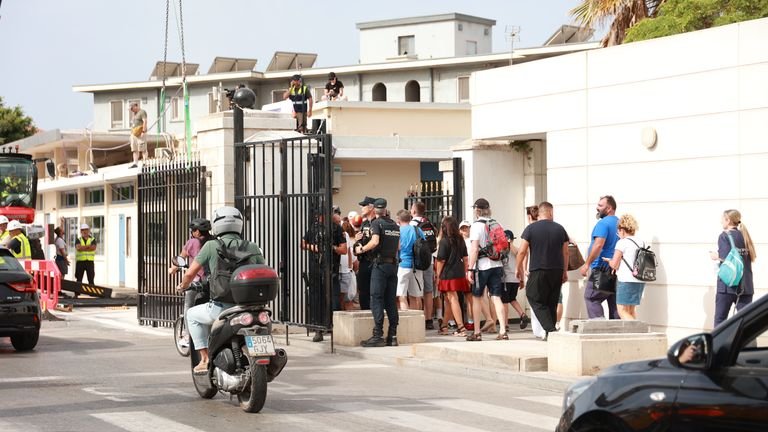
On the night of the fence’s removal, the atmosphere was made unusually complex by a coincidence. With the Spanish national football team defeating France in a match that evening, large crowds of excited fans waving Spanish flags flocked to the border. They shouted nationalist slogans such as “Gibraltar is Spanish” (Gibraltar es Español), their chants at times overpowering the official celebrations. Some emotional fans even entered Gibraltar’s territory, reaching Europa Point on the east coast to display their flags. Onsite, Gibraltar’s Chief Minister Fabian Picardo and the Mayor of La Línea, Juan Franco, met and embraced. Facing the fervent crowd, Mayor Franco expressed concern about potential future tensions, stating that if the English team were to reach the final and play against Spain, special police forces would be needed to maintain order.
