EU’s New Cooling Energy Landscape: Spain Takes Second Place
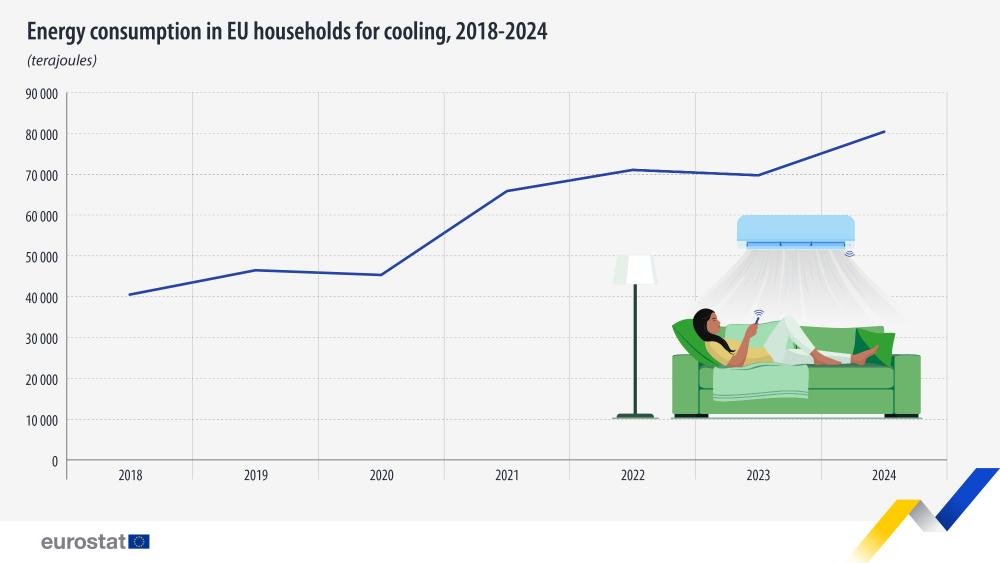
According to the latest data released by Eurostat, the EU’s total energy consumption for space cooling has reached 80,000 terajoules, nearly double the 40,500 terajoules from a few years ago, showing a significant growth trend.
In the member state rankings, Italy leads with a total cooling energy consumption of 26,300 terajoules. Spain follows closely with 14,300 terajoules, making it the second-largest consumer. Following Spain are Greece (11,900 terajoules) and France (9,500 terajoules).
Astonishing Increase: Spain’s Energy Consumption Soars 2.3-Fold
Historical data reveals Spain’s particularly striking growth in energy consumption for cooling. At the beginning of the reporting period, Spain was briefly the largest consumer of cooling energy in the EU. Its consumption has since surged to 2.3 times the initial level. In terms of absolute growth, Spain also ranks as the EU country with the second-highest increase, adding 8,400 terajoules, surpassed only by Italy.
Energy Challenges Driven by Climate Change
Expert analysis indicates that energy consumption for space cooling has increased almost annually over the past decade, primarily driven by global climate change and the resulting record-high summer temperatures. With extreme heat events becoming more frequent, residential and commercial demand for air conditioning and other cooling systems continues to soar. Official agencies predict this trend will pose a more severe test for national energy supply chains, making the assurance of a stable electricity supply a critical challenge for the future.
Consumption Share: A Different Perspective on Dependency
Although Spain and Italy lead in total consumption, the situation looks different when viewed from the share of final household energy consumption. Data shows that countries like Cyprus and Malta rank highest in this proportion. This indicates that while their total energy consumption is not high, cooling plays a more central role in their household energy mix, reflecting differences in climate adaptation and energy use patterns among member states.
