Spain’s persistently hot real estate finance market is reaching a critical turning point. Official data shows that under the dual pressure of rising interest rates and high property prices, the growth momentum of mortgage lending has stalled for the first time, signaling a new phase of adjustment for the market.
Signs of a Cooling Mortgage Market
According to the latest data from Spain’s National Statistics Institute (INE), 42,213 new housing mortgages were signed in May 2026, a slight decrease of 0.1% compared to the same period last year. Although the drop is minor, it marks the first year-on-year negative growth for this metric in nearly 24 months, and is seen as a significant turning point for the market.
Looking back at the data from this year, the trend of slowing mortgage growth is clear: the year-on-year growth rate was 16.3% in February, dropped to 9% in March, slowed further to 2.3% in April, and finally turned negative in May. However, market analysts also point out that a volume of over 42,000 loans per month still indicates a solid foundation of market demand, but buyers are becoming increasingly cautious in their decision-making.
Decline in Home Sales Widens
Compared to the slight drop in mortgages, the cooling of the real estate transaction market is more pronounced. Data shows that home sales in Spain fell sharply by 7.3% year-on-year in May 2026, marking the largest single-month decline in nearly two years. On a cumulative basis, total sales for the first five months of the year were also down 3.4% from the same period last year.
Industry experts generally believe that the core factor limiting the market is no longer the desire to buy, but the ability to afford it. Continuously rising property prices and increasing financing costs have created an ever-higher barrier to entry, deterring many potential buyers.
Financing Costs Rise Significantly
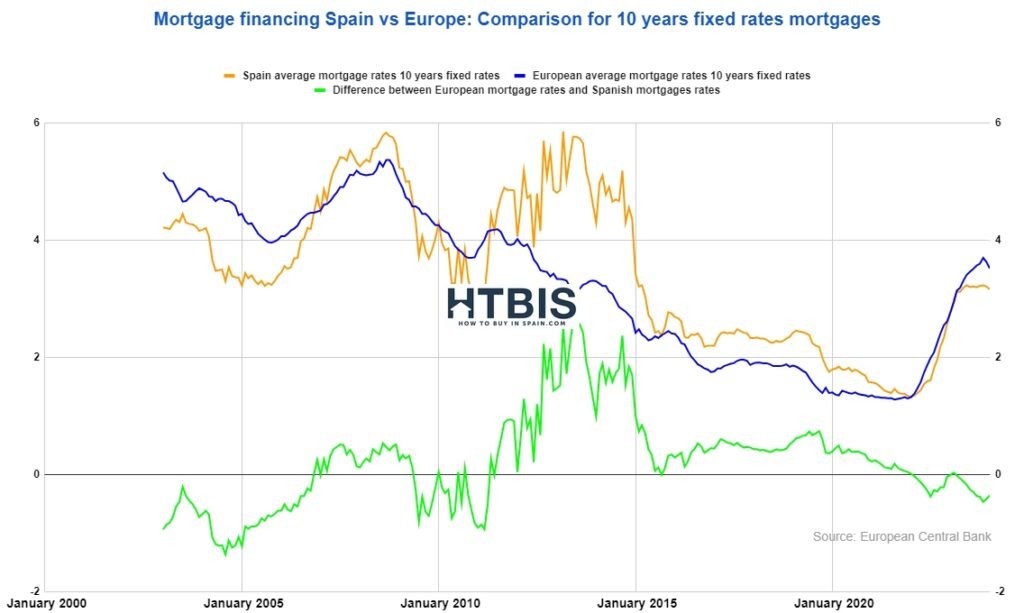
Buyers’ financial pressure comes not only from property prices but is more directly reflected in financing costs. Data shows that the average interest rate for newly approved loans climbed to 2.98% in May, the highest level since June 2025 and just shy of the 3% psychological threshold. Meanwhile, due to rising property prices, the average loan amount also increased by 9.7% year-on-year, reaching €174,866.
In terms of interest rate types, fixed-rate loans remain the market mainstream, accounting for 60.9% with an average rate of 2.96%. However, their share has been declining for several consecutive months. The average rate for variable-rate loans has reached 3%. Analysts believe that with the European Central Bank’s (ECB) rate hike policy and the continued rebound of the Euro Interbank Offered Rate (Euríbor), there is still room for future financing costs to rise.
Market Outlook: A Mix of Caution and Stability
Multiple real estate agencies’ analyses indicate that the Spanish mortgage market is entering a new period of adjustment and stabilization. On one hand, a robust job market and persistent essential demand provide support for the market. On the other hand, banks are becoming stricter in their loan approval processes, focusing more on risk control and profitability.
Experts predict that the mortgage market will stabilize in the second half of 2026, with the total number of loans granted for the year likely to be on par with 2025. If the ECB continues to maintain high interest rates to combat inflation, rising financing costs will continue to cool the real estate market, potentially making it even more difficult for average households to purchase a home.
