A Deep Dive into Spain’s Pension System: How to Go from a 50% Base to a 100% Full Pension
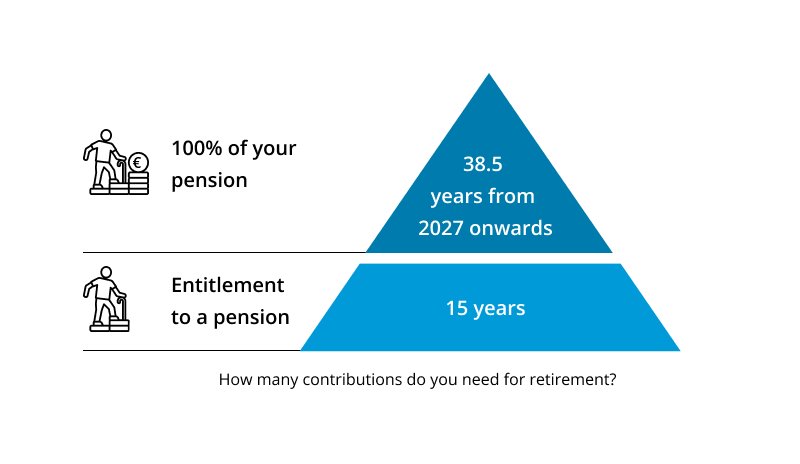
Spain’s social security system has clear minimum contribution requirements to qualify for a retirement pension. The income a worker receives after retirement is closely tied to their social security contribution history throughout their career, and any oversight in planning can lead to a permanent loss of pension benefits.
1. The 15-Year Minimum: An Entry Ticket for Just 50% of the Regulatory Base
According to Spanish social security regulations, the minimum threshold to qualify for a retirement pension is a cumulative contribution of 15 years. However, workers who meet this basic requirement can only receive 50% of their personal regulatory base (Base Reguladora) upon retirement. This amount provides a basic foundation for retirement life but is far from a full pension. If contribution years are less than 15, one cannot receive any regular pension, highlighting the importance of long-term, stable contributions.
2. Month-by-Month Accumulation: The Legal Path to a 100% Pension
To encourage workers to extend their careers, Article 210 of Spain’s General Social Security Law (Ley General de la Seguridad Social) outlines a precise incremental system. After completing the minimum 15 years of contributions, each additional month of social security payments increases the pension percentage by 0.19%. This monthly progression is the only way under the current legal framework to raise the rate from 50% to 100%. To reach the 100% full rate, it typically requires a total of about 36 to 37 years of contributions, with the exact duration depending on the regulations in effect at the time of retirement. Therefore, every extra month of work and contribution has a direct and crucial positive impact on the final retirement income.
3. Optimization Strategy (1): Pluriactivity to Significantly Boost Retirement Income
Pluriactivity (Pluriactividad), which means contributing to two or more different social security schemes simultaneously, is an effective financial planning strategy to maximize pension benefits. Labor lawyer Ignacio Sorsona notes in his professional analysis that this strategy can greatly improve cash flow after retirement. He provides a practical example: an employee with a regulatory base of €1,500 under the general employee scheme who also contributes as a self-employed person for ten consecutive years (based on the minimum contribution base of €950) will see a considerable increase in their final pension. According to calculations, this could increase their net monthly pension by €354, bringing their final monthly payment to €1,881.
4. Optimization Strategy (2): Choose Your Retirement Model Wisely
The way one exits the labor market also directly affects the pension amount. Experts generally agree that, in most cases, ‘Partial Retirement’ (Jubilación Parcial) is more financially beneficial than ‘Early Retirement’ (Jubilación Anticipada). Early retirement means a worker stops working before reaching the legal retirement age, which directly results in the loss of several months or even years of contributions, permanently lowering the pension percentage. In contrast, the partial retirement model allows workers to receive a portion of their pension while continuing to work and contribute on a part-time basis. This not only provides immediate income but also allows for the continued accumulation of contribution years, further increasing the final pension rate.
In summary, securing an ideal retirement pension is far more complex than simply reaching the legal retirement age. It requires long-term, detailed career planning that takes full advantage of cumulative contribution years, pluriactivity, and suitable retirement models. In an era of demographic uncertainty, relying on personal foresight and planning is the most reliable way to ensure a comfortable standard of living in retirement.
