Maximum-Level Red Alert in Multiple Areas, Temperatures Could Reach 44°C
Spain’s State Meteorological Agency (AEMET) announced on July 23, 2026, that the current heatwave has entered its most dangerous phase, issuing the highest-level red alert for high temperatures in several regions. The agency used the rare term ‘extreme danger’ (Peligro extraordinario) to emphasize the severity of the situation.
The red alert is primarily concentrated in the Murcia region and the southern part of the Valencia region. Specifically, in areas of Murcia such as the Segura river valley, the Guadalentín valley, Lorca, and Águilas, maximum temperatures are expected to surpass 44°C, marking the peak of this heatwave. Meanwhile, inland areas of the Valencia and Alicante provinces are also forecast to reach temperatures above 42°C.
Widespread High Temperatures Nationwide; Orange and Yellow Alerts Activated
In addition to the red alert zones, vast areas in eastern and southern Spain have also activated various levels of heat warnings, placing almost the entire country on alert.
- Orange Alert: Covers parts of Andalusia, Aragon, Castile-La Mancha, and Catalonia, as well as the province of Castellón.
- Yellow Alert: The Community of Madrid, the Balearic Islands, Navarre, La Rioja, and Ceuta are also under a high-temperature warning.
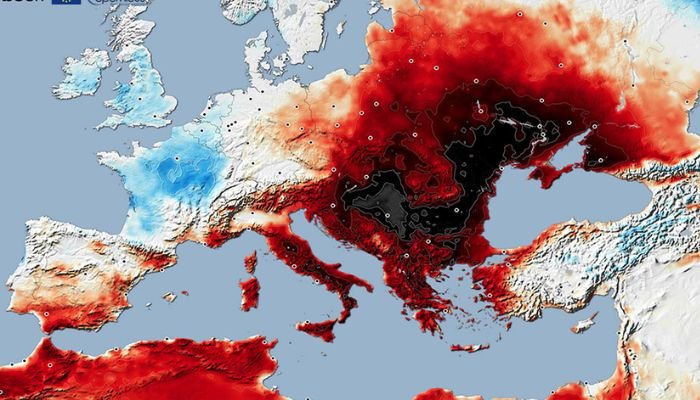
According to forecasts for July 23, most of Spain will see maximum temperatures exceeding 35°C. Many places in the south, the Ebro valley, and southern Castile-La Mancha will surpass 40°C, indicating the extensive impact of the high temperatures.
“Tropical Nights” Exacerbate Health Risks
Another significant feature of this heatwave is the persistently high nighttime temperatures, making it difficult for the body to recover overnight. On the night of July 23, minimum temperatures in large parts of southern Spain, along the Mediterranean coast, and in the Balearic Islands are expected to remain above 20°C.
In some areas along the Mediterranean coast and in the Guadalquivir valley, the minimum nighttime temperature will not even drop below 25°C, creating the phenomenon known as ‘torrid nights’ (Noches tórridas). This continuous pattern of scorching days and sweltering nights significantly increases the risk of health issues like heatstroke and heat exhaustion.
High Temperatures Accompanied by Risk of Severe Convective Weather
The sustained high temperatures also create conditions for severe convective weather. The meteorological department forecasts that on the afternoon of July 23, parts of Almería, Murcia, and Alicante may experience thunderstorms accompanied by strong wind gusts, with a possibility of hail in some areas. Additionally, Ibiza and Formentera could be affected by strong winds in the evening.
Official Advisory: July 23 is the Most Dangerous Day of This Heatwave
AEMET has stated that July 23 is expected to be the last day of this heatwave, with temperatures set to gradually decrease afterward. However, officials are once again reminding the public that before the hot weather subsides completely, this day remains the highest-risk day, and vigilance is crucial.
Authorities advise the public to:
- Avoid staying outdoors for extended periods during midday hours.
- Increase fluid intake and stay hydrated to prevent dehydration.
- The elderly, children, and vulnerable individuals with chronic illnesses need to take special precautions to stay cool.
- If symptoms of heatstroke such as dizziness, nausea, or confusion occur, move to a cool place immediately and seek medical assistance.
