Euro Begins Redesign with Public Consultation
The European Central Bank (ECB) recently announced the first major redesign of euro banknotes in over two decades. It has released candidate designs and is inviting eurozone residents to participate in an online survey. The ECB stated that the main goals of this update are to enhance security with more advanced anti-counterfeiting technologies, use more environmentally friendly and durable materials, and improve the design for all users, including those with visual impairments. The final design direction will be determined by the ECB’s Governing Council by the end of 2026, after considering public opinion, expert reviews, and technical assessments.
Two Themes Compete: “European Culture” and “Rivers and Birds”
After several rounds of selection, the final design proposals are centered around two main themes, exploring what best represents the common identity of contemporary Europe.
Option 1: Honoring European Cultural Giants
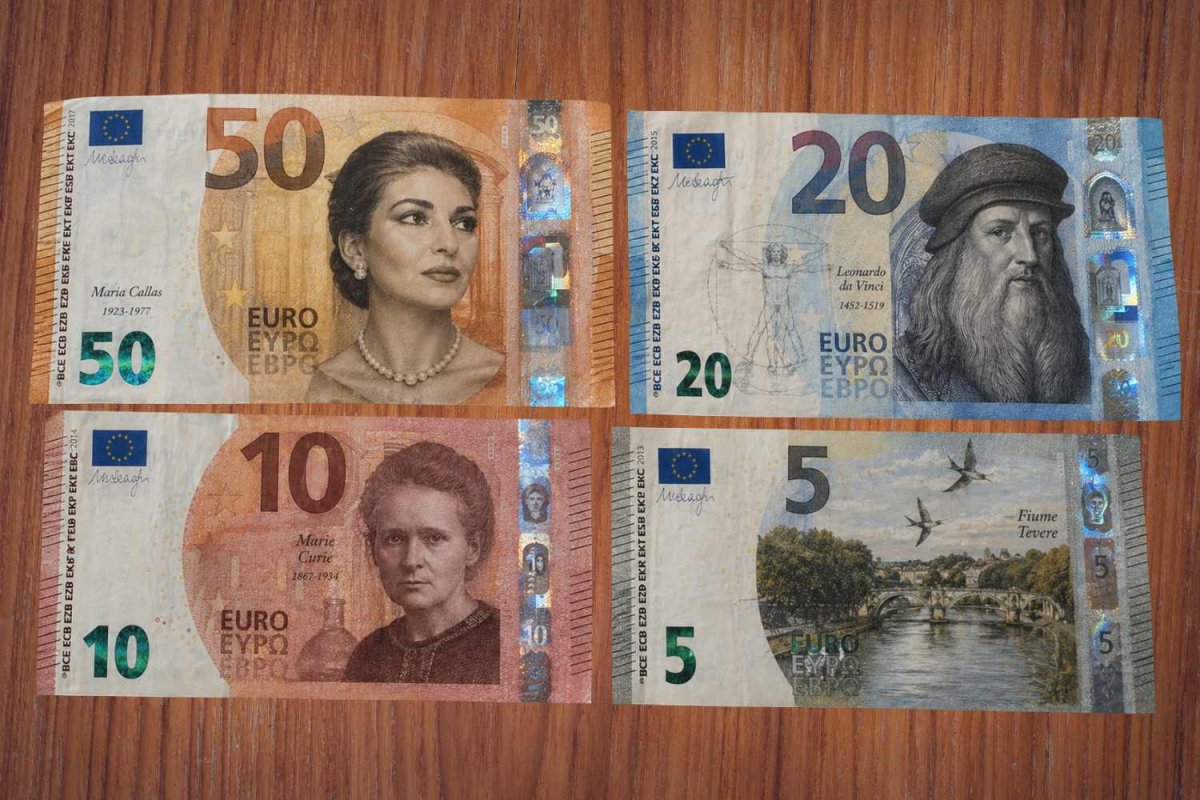
This theme proposes featuring portraits of real historical figures on euro banknotes for the first time to celebrate Europe’s shared cultural heritage. The candidates are all outstanding representatives who transcended national borders and achieved world renown in their respective fields, including:
- €5: Greek soprano Maria Callas
- €10: German composer Ludwig van Beethoven
- €20: Polish-French physicist and chemist Marie Curie
- €50: Spanish literary giant Miguel de Cervantes
- €100: Italian Renaissance polymath Leonardo da Vinci
- €200: Austrian pacifist and the first woman to win the Nobel Peace Prize, Bertha von Suttner
Option 2: Focusing on Cross-Border Natural Heritage
A distinctly different set of designs focuses on the theme of ‘Rivers and Birds,’ emphasizing Europe’s shared natural wealth. This proposal combines iconic European birds like the kingfisher and white stork with landscapes of cross-border rivers and wetlands, symbolizing the diversity and resilience of Europe’s ecosystems. The reverse side of the banknotes might depict buildings of EU institutions such as the European Parliament and the European Court of Justice, reflecting the connection between nature and institutions.
From Fictional Architecture to Common Symbols: The Evolution of Euro Design
Since their official introduction in 2002, the current euro banknotes have been known for their unique ‘de-nationalized’ design. To avoid disputes over national identity within a monetary union of multiple sovereign states, the original designers chose to depict fictional architecture representing different historical periods in Europe—windows, arches, and bridges symbolizing openness, cooperation, and connection, respectively. Although these motifs are distinctly European, they do not correspond to any real buildings. Interestingly, the Dutch town of Spijkenisse later brought the fiction to life by building all seven ‘Euro bridges’ based on the banknote designs in 2011. Today, the shift from ‘fictional architecture’ to ‘cultural figures’ or ‘natural heritage’ reflects the ECB’s attempt to find a new, more cohesive and contemporary symbol for the euro.
Next Steps and Outlook
After the public consultation concludes, the ECB’s Governing Council will make the final decision on the theme. The chosen design will then undergo further optimization, technical testing, and integration of security features before it can be put into production and circulation. Therefore, the public will continue to use the current version of the euro for the next few years. Nevertheless, this update is undoubtedly the most significant visual identity overhaul for the euro since its inception, and the final design will be a reflection of Europe’s self-perception in a new era.
