Wildfires Rage Across Multiple Regions, Forcing Mass Evacuations
Fueled by persistent high temperatures, drought, and strong winds, wildfires across several parts of Spain have rapidly intensified. The situations in the Community of Madrid and the province of Ávila are currently the most severe. In Madrid, three main fires are burning simultaneously: one has spread from the province of Toledo to Almorox, another is affecting Villa del Prado, and a third, sparked by a vehicle fire in San Martín de Valdeiglesias, has spread quickly.
Authorities have confirmed that the intensity of the blaze has overwhelmed local response capabilities. In the Community of Madrid alone, more than 10,000 residents have been evacuated. Meanwhile, a wildfire in the Burgohondo area of Ávila province also remains uncontrolled, leading to the emergency evacuation of approximately 1,500 residents and tourists from the El Tiemblo area.
Spain Activates Highest-Level Emergency Response
Facing the rapidly deteriorating situation, the Spanish central government has officially declared a ‘State of Emergency of National Interest’ (Emergencia de Interés Nacional) for the Community of Madrid and the province of Ávila. This is one of the highest-level disaster response mechanisms established under Spain’s National Civil Protection System Law, meaning the central government will take full control and coordinate all national, regional, and local rescue efforts.
Minister of the Interior Fernando Grande-Marlaska has announced that the central government will direct the emergency operation to consolidate resources and tackle this severe crisis.
Military Emergencies Unit Leads On-the-Ground Rescue Efforts
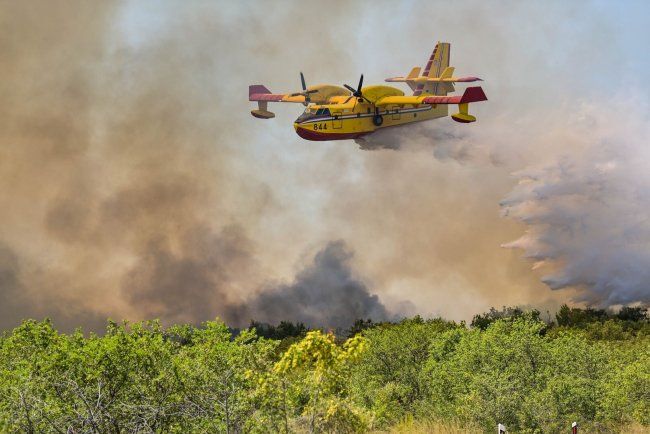
As per the state of emergency declaration, Spain’s Military Emergencies Unit (UME) has been deployed as the main force to the front lines, leading firefighting and evacuation operations on the ground. The UME is working in coordination with the Madrid Fire Brigade, municipal firefighters, and other rescue teams to control the spread of the fire and protect lives and property.
To handle a potential influx of casualties, the Madrid Health Service (SERMAS) has activated its emergency plan, setting aside over 600 hospital beds. Reports indicate that the injuries treated so far are mostly for minor smoke inhalation or anxiety, with no serious injuries reported yet.
Government Requests EU Aid as Situation Remains Critical
With the fire area continuing to expand, the Spanish government has sent an urgent request for help to the EU Civil Protection Mechanism, seeking support with additional international firefighting aircraft and rescue resources.
Spanish Prime Minister Pedro Sánchez described the current situation as ‘heartbreaking and extremely serious.’ He urged all residents in the affected areas to strictly follow official evacuation orders and avoid hazardous zones. Unfavorable weather conditions are expected to persist in the coming days, keeping Spain’s wildfire risk high and posing significant challenges to firefighting efforts.
