Compared to most European countries, Spain’s pace of life is noticeably later, with dinner commonly served between 9 and 10 PM and bedtime often pushed past midnight. This phenomenon is rooted in various factors, including its culture, social customs, time zone, and climate. However, Traditional Chinese Medicine (TCM) expert Liu Zheng has offered his professional insight, suggesting this lifestyle could be a potential obstacle to the health of the Spanish population.
The Spanish Schedule: Cultural Habits and Health Concerns
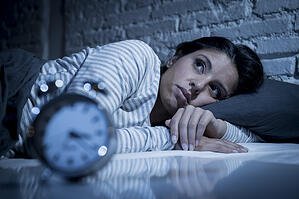
Recently, TCM expert Liu Zheng appeared on the Spanish podcast ‘Lo Que No Se Ve,’ where he commented on the country’s prevalent daily schedule. His views have also garnered attention from media outlets like ABC newspaper. He stated unequivocally that if one were to assess the most detrimental health habit among Spaniards, eating and sleeping late would undoubtedly be the primary issue.
He believes that compared to neighboring countries like Portugal and France, Spain’s lunch and dinner times are significantly later, which is a major contributor to the population’s chronic sleep deprivation. He emphasized, “Dinner should be eaten earlier, and more importantly, you should go to bed earlier.”
Sleep Recommendations Based on the ‘Organ Body Clock’ Theory
Liu Zheng’s advice is based on the TCM concept of the ‘Zang-fu Body Clock,’ a theory which posits that the body’s organs have specific periods of activity and repair throughout the day.
According to this theory, the period from 11 PM to 1 AM is governed by the Gallbladder meridian, a time when the body should be in a deep state of sleep. Following this, from 1 AM to 3 AM, is the crucial period for the Liver to detoxify, repair, and regenerate. Therefore, consistently sleeping late directly interferes with the nocturnal functions of these two vital organs.
He strongly advises that to align with this natural rhythm, people should try to fall asleep before 11 PM and maintain a regular sleep schedule.
Re-evaluating Dinner: Not a Physiological Necessity
Regarding dinner, Liu Zheng presented a groundbreaking perspective: from a physiological standpoint, not everyone needs to eat dinner. He explained that eating too late or having an overly large dinner can severely impact sleep quality. This is because the body, which should be entering a repair mode at night, is instead forced to divert significant energy to digest food.
“It’s hard to sleep well on a full stomach,” he summarized. He further pointed out that the hunger many people feel late at night might not be a true need for energy, but rather an illusion caused by fatigue. At that point, what the body truly needs is rest, not food.
Sleep: A High-Return Health Investment
To encourage people to change their habits, Liu Zheng compared adequate sleep to a long-term investment in one’s health. He believes that investing seven to eight hours of high-quality sleep each night can yield up to 16 hours of focus and high productivity during the day, describing it as a ‘transaction’ with an extremely high rate of return.
According to TCM principles, ensuring sufficient sleep, especially in a dark environment free from screens and light pollution, is fundamental to enhancing physical function and mental well-being. Aligning with the body’s circadian rhythm is a key pathway to achieving long-term health and vitality.
