Wildfire Emergency in Community of Madrid: Nearly 900 Hectares Destroyed, Capital Region Faces Multiple Impacts
On July 23, 2026, the Spanish capital of Madrid and its surrounding areas faced one of the most severe wildfire challenges in recent years. A blaze that started in the neighboring province of Toledo, in Almorox, fueled by high temperatures and strong winds, crossed into the southern part of the Community of Madrid, at one point coming within just 70 kilometers of the city center. The fire not only brought sky-blotting smoke and a pungent burning smell but also caused traffic disruptions and resident evacuations, giving Madrid a direct experience of the threat posed by extreme climate.
Fire Status: Level 2 Response, Blaze Remains High-Risk
The fire broke out on July 23 and spread rapidly. As of this report, the total affected area is nearly 890 hectares, with about 600 hectares within the Community of Madrid. The affected area is mainly concentrated in the southern municipality of Villa del Prado.
Although Spain’s Civil Protection system activated a Level 2 forest fire emergency response and deployed significant resources, and Madrid’s fire department has successfully stabilized the fire’s perimeter (perimetrado), preventing further large-scale spread, the fire is not yet declared ‘under control’ (controlado) due to active hotspots within the area. This means the risk remains high, especially with the forecast of continued high temperatures in the coming days.
Widespread Impact: Traffic Paralysis and Resident Evacuations
The fire had a direct impact on local infrastructure and daily life. To ensure safety, major roads connecting the area, the M-507 and N-403 highways, were temporarily closed. Notably, the Madrid-Barcelona high-speed rail line (AVE), which connects Spain’s two largest cities, also suspended operations for two hours due to the fire, causing a ripple effect across the national transport network.
Regarding residents’ lives, approximately 700 people were evacuated to escape the flames and smoke. Although some have been allowed to return as the risk has decreased in certain areas, others remain unable to go home due to the risk of flare-ups. The fire also affected or damaged around 30 homes and burned large swathes of pine forest, scrubland, and agricultural land.
Emergency Response and Future Challenges
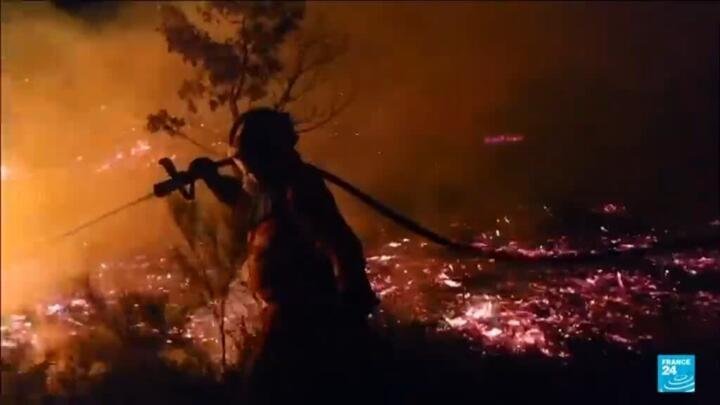
In response to the severe fire, Spain mobilized multiple agencies, including Madrid’s forest fire brigades, fire departments, the Civil Guard (Guardia Civil), Civil Protection organizations, and Spain’s Military Emergencies Unit (UME), for a large-scale joint air and ground firefighting operation. Helicopters and fixed-wing aircraft conducted intensive water and fire retardant drops during the day, while ground crews worked through the night to contain the fire lines.
However, the real test continues. Weather forecasts indicate that temperatures will consistently exceed 40°C over the next few days, accompanied by shifting winds and persistent low humidity. The dry vegetation makes the risk of flare-ups extremely high. This incident, along with several other fire alerts in northern Madrid on the same day, highlights the stark reality Spain faces: in the context of climate change, wildfires are becoming more frequent, more intense, and are encroaching ever closer to urban centers.
