Spain Wildfire Emergency: Over 10,000 Evacuated, EU Sends Urgent Reinforcements
In the summer of 2026, the forest fire situation across multiple regions of Spain continues to worsen, driven by a combination of high temperatures, drought, and strong winds. As of July 24, the fires have led to mass evacuations, prompting the Spanish government to activate a national emergency response and formally request assistance from the European Union.
Fire Overview: Madrid and Ávila Provinces as Hardest-Hit Areas
Currently, the most severe fires are concentrated in the central Spanish regions of the Community of Madrid and the province of Ávila. Local authorities have declared a “state of emergency of national interest,” allowing the central government to take over and coordinate the firefighting operations.
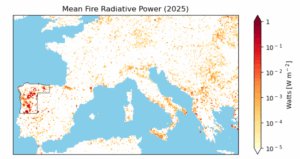
In the Burgohondo area of Ávila province, a fierce wildfire has forced the emergency evacuation of approximately 1,500 residents, while another 8,000 have been instructed to shelter in place, keeping doors and windows closed against the dense smoke. Meanwhile, several municipalities in the Community of Madrid, including Villa del Prado, San Martín de Valdeiglesias, Pelayos de la Presa, and Aldea del Fresno, are also under severe threat from the fires, with a cumulative total of about 10,000 people evacuated. Combined, more than 11,500 people have been forced to leave their homes due to the fires.
National Response: Emergency Declaration and Ground Deployment
To combat this crisis, the Spanish government has deployed significant resources to the front lines. Currently, over 270 professional firefighters and more than 40 ground crews are battling the blazes. However, given the vast area and complex terrain of the fires, domestic resources alone are insufficient to fully contain the spread, making it necessary to seek help from neighboring countries and the EU.
International Aid: EU Activates Civil Protection Mechanism
Facing a severe domestic disaster situation, the Spanish government has formally activated the “European Union Civil Protection Mechanism,” requesting aerial firefighting support from the EU. The European Commission responded swiftly, coordinating assistance from member states.
Under this mechanism, Greece and Italy have each dispatched two Canadair CL-415 amphibious firefighting aircraft, with a total of four planes en route to the disaster zones in Spain. Additionally, the EU has activated its Copernicus Emergency Management Service to provide real-time satellite maps and disaster analysis to ground command, enhancing the efficiency and precision of firefighting operations. EU officials have stated that if the situation escalates, a reserve force of 777 firefighters can be mobilized to join the effort upon Spain’s further request.
Background: The EU’s Coordinated Disaster Response System
Established in 2001, the core mission of the EU Civil Protection Mechanism is to strengthen coordination and cooperation among member states and participating countries in response to major natural and man-made disasters. When any participating country (including the 27 EU member states and 10 non-EU countries such as Norway, Turkey, and Ukraine) is overwhelmed by a disaster like a forest fire, flood, or earthquake, it can request assistance through the mechanism. The European Commission coordinates the deployment of resources and covers a significant portion of the transport and operational costs (typically at least 75%) to ensure that aid arrives quickly and effectively.
