Threat of a ‘Mega-Fire’ Under a State of Emergency
A severe wildfire that broke out in the western mountains of the Community of Madrid and the neighboring province of Ávila continues to spread, prompting the Spanish government to declare a state of emergency. The President of the Community of Madrid, Isabel Díaz Ayuso, described the fire as “the worst in Madrid’s history.”
Rescue command is currently facing the daunting challenge of two main fire fronts potentially merging into a single “mega-fire,” and are treating them as a unified incident. Spanish Prime Minister Pedro Sánchez noted that despite the complexity of the blaze, the next few days could be a “critical window” for bringing it under control.
Over 60,000 Affected, NASA Base Urgently Evacuated
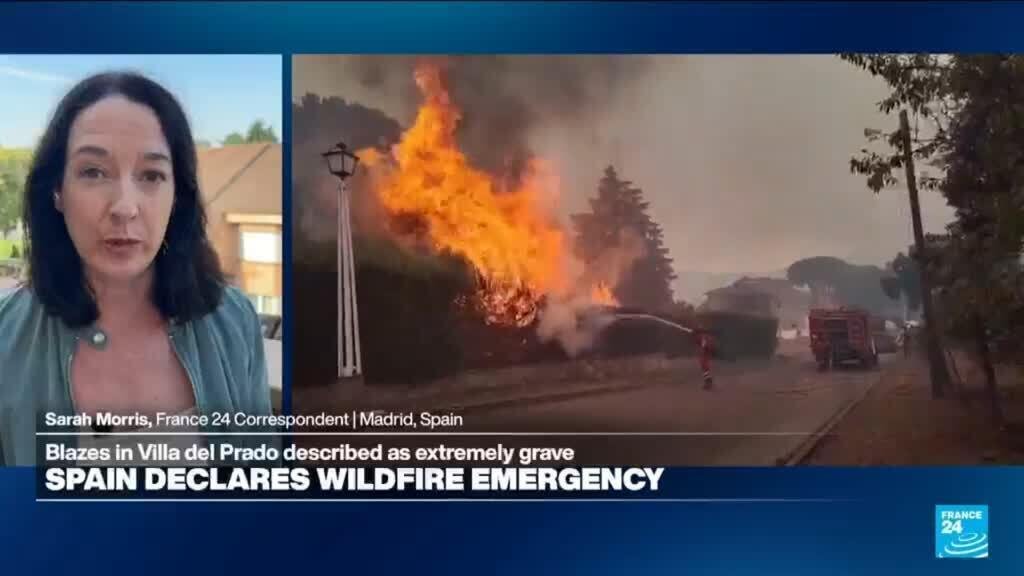
As of July 25, 2026, the wildfire has led to the evacuation or confinement of over 60,000 residents, with several towns undergoing emergency nighttime evacuations. In the hardest-hit area of Ávila, an estimated 13,000 to 15,000 hectares of forest have been consumed by the flames.
The fire line continues to advance, threatening critical infrastructure. The National Aeronautics and Space Administration (NASA) Deep Space Communications Complex in Robledo de Chavela, southwest of Madrid, has been forced to evacuate over 90 staff members as the fire approaches.
Transportation Network Paralyzed, Multiple Main Roads Closed
The transportation system in the western mountains of Madrid has been largely paralyzed by the wildfire. Officials have confirmed that at least 13 roads are closed, severely impacting residents’ travel and the transport of rescue supplies. Major closed sections include:
- M-501 highway (near San Martín de Valdeiglesias)
- M-507 highway (from Aldea del Fresno to Villa del Prado)
- M-540 highway (from Villa del Prado towards Toledo)
- M-541 highway (from Pelayos de la Presa to San Martín de Valdeiglesias)
Additionally, several secondary roads such as the M-512, M-521, and M-531 are also closed or have traffic restrictions in place. Dozens of roads in provinces like Ávila and Guadalajara have also been cut off by the fire. Authorities are advising the public to avoid traveling to the affected areas and to check the latest traffic information before setting out.
Firefighting Operations and Weather Challenges
The Spanish Military Emergencies Unit (UME), along with firefighting teams from various regions including Valencia, are battling the blaze around the clock. Their primary mission is to prevent the fire from spreading towards the more densely populated area of El Escorial, creating a “last line of defense.”
Although a drop in nighttime temperatures and an increase in humidity temporarily slowed the fire’s spread, meteorological services warn that stronger winds and sudden shifts in wind direction during the day could worsen the situation. The weather conditions over the next few hours, especially the wind, will be critical in determining the outcome of this disaster.
