Blaze Slows, but Dangers Remain
As of July 27, 2026, the massive wildfire that has been raging uncontrollably for four days in the western mountains of the Community of Madrid has slowed its advance due to improving weather conditions. Weaker winds have provided a valuable ‘window of opportunity’ for firefighting efforts.
Emergency teams are tackling the fire from the east, west, and south. The eastern front is now largely stabilized, while efforts on the western front are focused on preventing the fire from spreading towards populated areas like Cadalso de los Vidrios. The most concerning front is south of the San Juan Reservoir (Pantano de San Juan), where shifting winds pose a high risk of flare-ups that could push the blaze into unaffected areas south of the reservoir. Considered the worst wildfire in the history of the Community of Madrid, it originated from the merging of three separate fires and has now burned over 20,000 hectares.
Nearly 30,000 Evacuated, 15 Shelters Opened
According to the latest figures from the Ministry of the Interior, the wildfire has led to the precautionary evacuation of 29,609 people, while another 21,132 residents have been instructed to stay home with doors and windows closed. As many as 12 municipalities are severely affected, including Chapinería, Navas del Rey, and Robledo de Chavela. Several residential areas, such as El Encinar del Alberche, have also been completely evacuated. Furthermore, residents in four other municipalities, including San Martín de Valdeiglesias, are under a precautionary lockdown.
To accommodate the evacuees, the government of the Community of Madrid has urgently opened 15 temporary shelters, mostly in large sports centers. Currently, 2,468 people are staying in these shelters, where authorities are providing them with accommodation, food, and personal hygiene supplies. To help soothe children, activities such as movie screenings and clown performances have also been organized at the shelters.
Severe Losses and Disrupted Transport Arteries
The fire has caused extensive damage to local property and infrastructure. In the El Encinar del Alberche residential area in Villa del Prado alone, 43 homes have been completely destroyed and another 286 damaged. The total number of homes lost is still being assessed.
The blaze has also crippled the region’s transportation network, with sections of 12 roads cut off. These include key routes like the M-501 highway between Navas del Rey and San Martín de Valdeiglesias, and the M-507 between Aldea del Fresno and Villa del Prado, severely impacting rescue operations and local travel.
National Response and External Aid
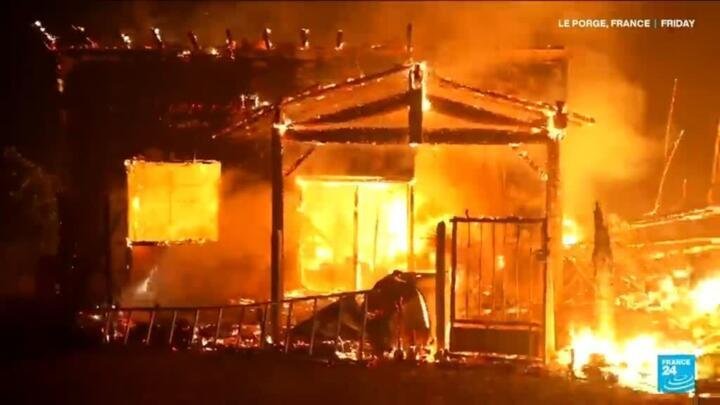
In response to the severe disaster, the Spanish government has declared a national state of emergency for Madrid and the neighboring province of Ávila, and has formally requested aid from the European Union. A massive response force is currently on the front lines, including 13 water-bomber planes and helicopters, over 300 firefighters and forestry personnel, and soldiers from Spain’s Military Emergencies Unit (UME). During the night, 50 ground teams have been using heavy machinery to create new firebreaks to consolidate the progress made during the day.
To maintain order in the evacuated areas and prevent looting, the Guardia Civil has deployed additional officers to increase patrols in the affected municipalities and residential zones, ensuring clear access for rescue routes and protecting residents’ property.
