In 2026, Spain’s real estate market presents a complex landscape. House prices remain high, while fluctuating borrowing costs challenge the decision-making of every potential buyer. For many, “when to enter the market” has become a crucial question.
Soaring Prices Fueled by Supply Shortages
The core issue in Spain’s property market is insufficient supply and rising demand. The shortage of affordable housing is particularly acute in the new-build sector, where the pace of construction falls far short of market demand, directly fueling continuous price increases.
According to statistics as of April 2026, the average price of residential property in Spain has climbed to €2,748 per square meter. Looking back, this figure represents a roughly 50% increase from the €1,829 per square meter recorded in April 2022. On a year-over-year basis, prices in April 2026 were also up 16.9% compared to the same month last year, indicating strong growth momentum.
Future Market Trends: Experts Predict Moderate Growth
For the remainder of 2026 and beyond, industry experts generally hold a cautiously optimistic view, believing that the likelihood of either a price surge or a sharp crash is low. Instead, the market is more likely to maintain a pattern of moderate growth.
Gómez Huertas, president of the Spanish Federation of Real Estate Associations (FADEI), notes that price corrections may occur in specific areas that are overpriced or have weak demand. However, he emphasizes that as long as the market fails to significantly increase the supply of affordable and new-build housing, the overall upward pressure on prices will be difficult to eliminate.
Similarly, the Spanish Association for Guaranteed Rentals (SEAG) predicts that although the rate of price increases may slow in the future, widespread price drops are unlikely in major cities like Madrid and Barcelona and their metropolitan areas.
Analyzing Borrowing Costs: Decision-Making Amid Interest Rate Volatility
The cost of borrowing is another key variable affecting home-buying decisions. Data shows that in April 2026, the Euribor (Euro Interbank Offered Rate), a key benchmark for mortgage rates, rose to 2.747%. This is higher than the 2.143% recorded in the same period of 2025 but remains below the peak levels of over 3% or even 4% seen between mid-2023 and mid-2024.
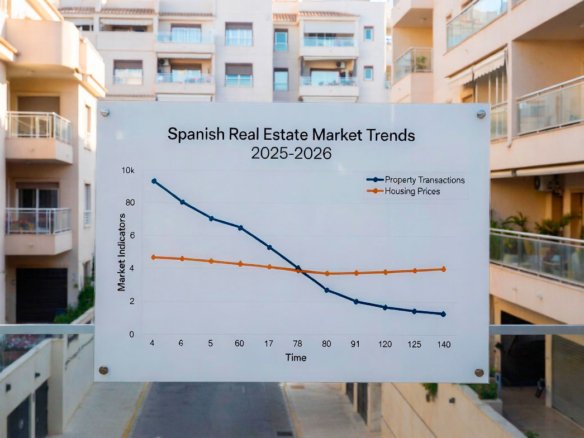
In response to rate fluctuations, some banks have begun to raise their lending rates or tighten approval criteria. Some analysts argue that waiting for mortgage rates to fall may not be a wise move, as improved financing conditions often stimulate more buyer demand, which could in turn drive prices even higher. Therefore, for buyers needing a mortgage, locking in a current rate sooner rather than later could be a prudent way to avoid the risk of rising financing costs in the future.
When to Buy? Prioritize Personal Circumstances Over Market Predictions
Regarding the “best time to buy,” the industry consensus is that buyers should focus more on their personal financial situation and actual needs rather than trying to perfectly time the market’s short-term fluctuations.
Experts advise that if a property meets your long-term housing needs, is reasonably priced, and you have determined that the down payment, monthly payments, and long-term repayment are manageable within your budget—backed by a stable job and income—then delaying your purchase may not be necessary. Additionally, before buying, you should also assess the property’s condition, potential maintenance costs, energy efficiency, and future resale potential.
Overall, there is little clear downward pressure on Spanish house prices or interest rates in the short term. For well-funded buyers with strong repayment capacity, 2026 could be a relatively suitable time to enter the market. However, for potential buyers with a less stable financial footing, prioritizing financial security and avoiding rushing into a high-priced market is paramount.
