State of Emergency Declared by Central Government
A massive wildfire, triggered by an extreme heatwave, is spreading rapidly across central Spain. The fire initially broke out in the province of Toledo on July 24 and, fueled by strong winds and high temperatures, quickly spread north to the southwestern Community of Madrid and the province of Ávila. Thick smoke has engulfed the areas around municipalities such as Prado, Fresno, and San Martín de Valdeiglesias.
In response to the rapidly worsening situation, Spain’s Ministry of the Interior has declared a “Situation of National Interest” (Situación de Interés Nacional) for the most affected areas in the Community of Madrid and the province of Ávila. Extensive resources, including the Military Emergencies Unit (UME), have been deployed for a coordinated land and air firefighting operation.
Record-Breaking Destruction: Over 77,000 Hectares Burned
According to data from Spain’s Ministry of the Interior and the EFE news agency as of July 28, the series of wildfires has burned a cumulative total of approximately 77,000 hectares. The fire in the province of Ávila has tragically become the largest single wildfire ever recorded in Spanish history. One fatality has been reported in the affected area of the province.
Tens of thousands of residents in Madrid, Ávila, and Toledo have been evacuated as the flames approach. Simultaneously, another large-scale wildfire has broken out in the eastern province of Castellón, putting the national firefighting system under immense pressure on multiple fronts.
The Science Behind the Blaze: The “30-30-30 Rule”
Experts from Spain’s State Meteorological Agency (AEMET) point out that the rapid spread of the fire is directly linked to extreme weather conditions known as the “30-30-30 rule.” This rule specifies:
- Temperatures above 30 degrees Celsius
- Relative humidity below 30%
- Wind speeds exceeding 30 kilometers per hour
This combination of dry, hot, and windy weather creates perfect conditions for explosive fire growth, significantly reducing the effectiveness of traditional firefighting methods and making the task extremely difficult.
Timeline: From Uncontrolled Spread to Brief Respite
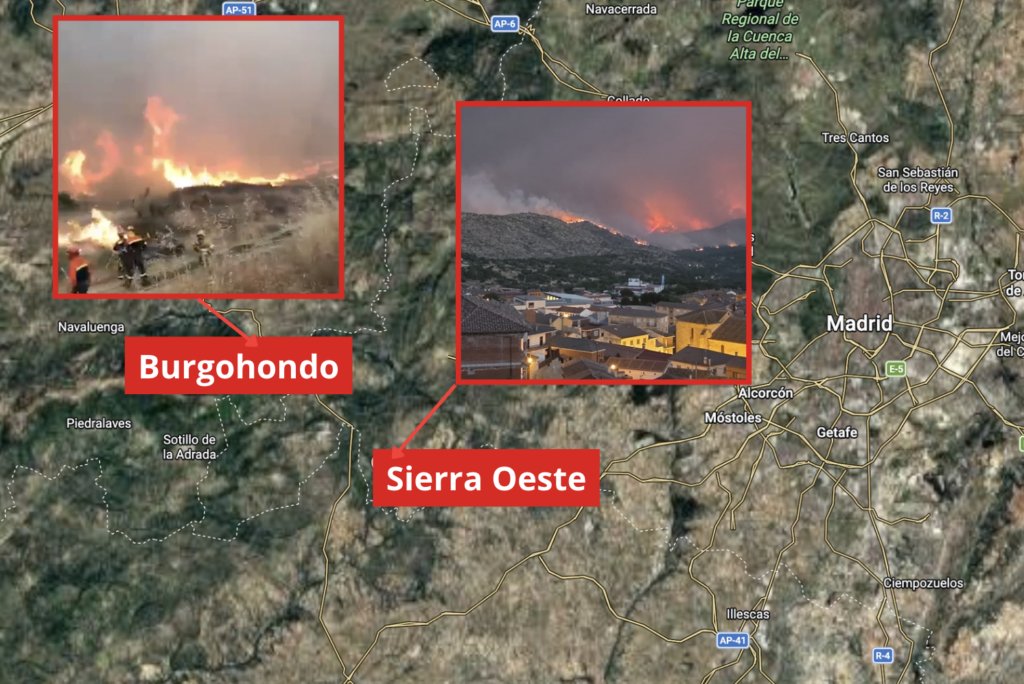
July 24-25: The fire ignites and spreads rapidly at the border of the Toledo, Madrid, and Ávila provinces. Authorities declare a state of emergency, evacuate tens of thousands of residents, and close multiple highways.
July 26-27: The fire worsens, threatening several towns. On the evening of the 27th, a sudden change in wind direction forces the complete emergency evacuation of the town of Valdemaqueda in the Community of Madrid.
July 28: Thanks to reduced wind speeds and increased humidity overnight, the fire’s advance is brought under partial control, creating a crucial window for firefighters. However, AEMET warns that another heatwave is approaching, the overall fire risk remains critical, and the highest-level alert has not been lifted.
