For those of you who have just arrived in Spain, or are planning your studies here, does the thought of choosing a university feel overwhelming? Private or public? Big city or small town? Which major to choose? Today, I want to have a casual chat about one major category: Spain’s comprehensive public universities. Hopefully, this can help clear things up for anyone feeling lost.
What is a Comprehensive Public University?
Simply put, they are what you might consider ‘traditional’ universities. They are state-funded, often have a long history, and offer a vast range of subjects. From humanities and philosophy to science, engineering, and medicine, you can find almost any field of study you’re interested in. Their biggest advantages are the relatively low tuition fees, guaranteed quality of education, and the high recognition of their degrees. For students on a budget who want a systematic higher education, public universities are definitely the top choice.
Spain’s public universities are spread throughout the country, with nearly every autonomous community boasting several reputable institutions. For example, the Complutense University of Madrid and the Autonomous University of Madrid in the capital, or the University of Barcelona and the Autonomous University of Barcelona in Catalonia, are all world-renowned.
Pictured is the historic main building of the University of Barcelona. Impressive, isn’t it? These schools not only have a strong academic atmosphere, but their campuses are often landmarks within the city.
A Quick Look at Some Key Universities
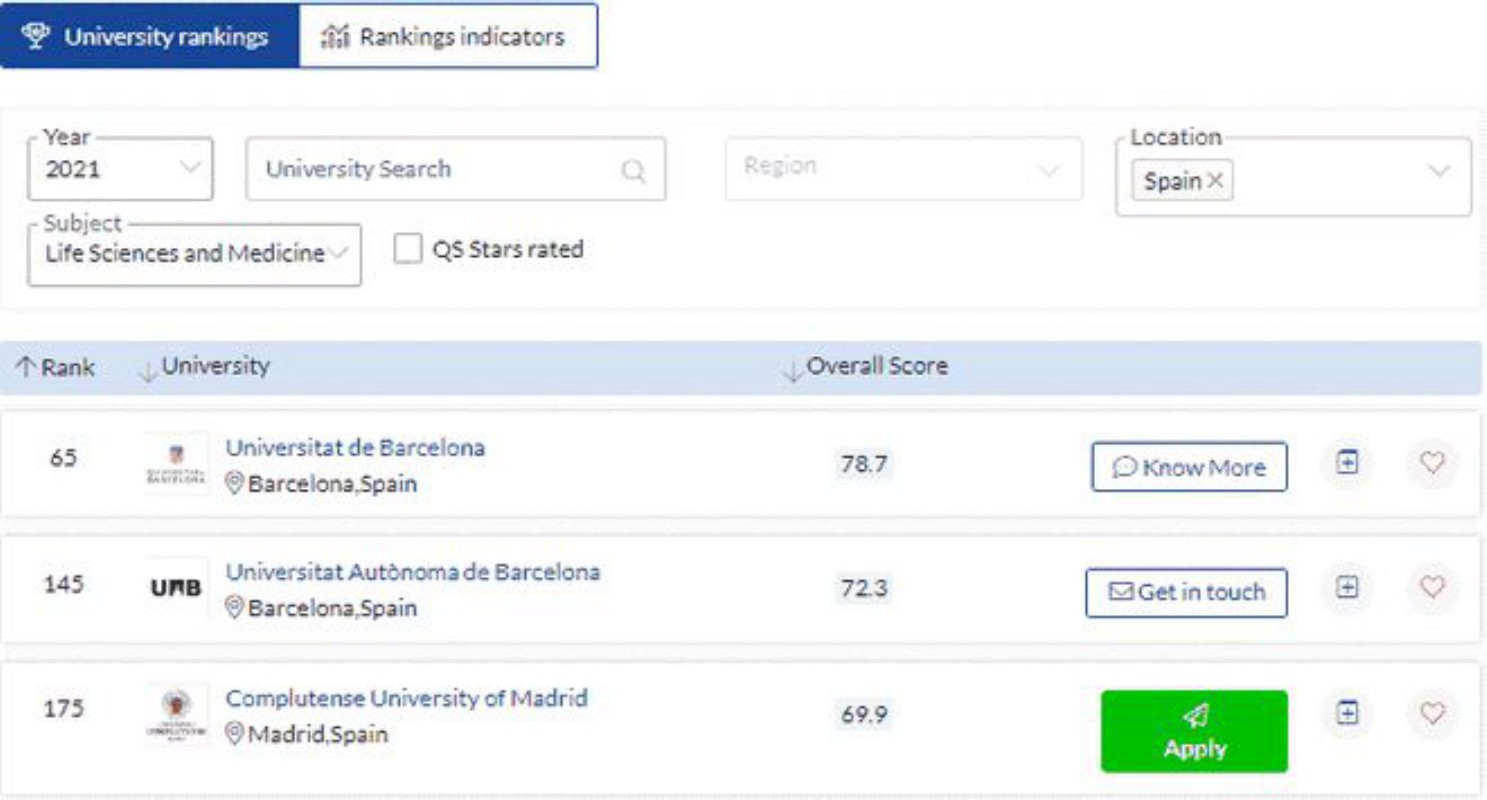
To give you a more concrete idea, I’ve put together a simple table listing a few frequently asked-about universities and their characteristics. Of course, this is just the tip of the iceberg; you should do more in-depth research based on your major and interests. You can check out the Spanish comprehensive university rankings.
| University Name | City | Key Strengths |
|---|
| Complutense University of Madrid | Madrid | Strong in humanities, social sciences, and arts; rich history, city-center campus |
| University of Barcelona | Barcelona | Leader in medicine, pharmacy, and life sciences; high overall ranking, great city vibe |
| Autonomous University of Madrid | Madrid | Renowned for law, economics, and sciences; beautiful campus, strong research focus |
| University of Granada | Granada | Famous for translation and information engineering; low cost of living, rich cultural heritage |
Public universities have their ‘other side’ as well. For instance, student numbers are large, and it’s common to be in a lecture hall with several hundred people, making it difficult to get one-on-one attention from professors. Administrative processes can also be a bit ‘typically Spanish’—not very efficient and requiring a lot of patience. But overall, the pros far outweigh the cons. This kind of environment really helps develop your independent learning and problem-solving skills.
Which university are you aiming for? Or are there any senior students currently studying at these universities who can share their real experiences? Feel free to leave a comment and join the discussion below!
