Wildfires Burn Across Spain as Overall Situation Remains Critical
According to official reports from Spain on Wednesday, although the major fires in Madrid and Ávila provinces have been effectively contained, the nationwide firefighting situation remains challenging. Prime Minister Pedro Sánchez noted that ten active fires are still burning across the country. With a new heatwave arriving on Wednesday, as warned by the State Meteorological Agency (AEMET), the next 12 hours will be a ‘decisive moment’ to consolidate current firefighting gains, as high temperatures and low humidity significantly increase the risk of reignition.
Madrid & Ávila: Fires Stabilizing, Reconstruction Begins
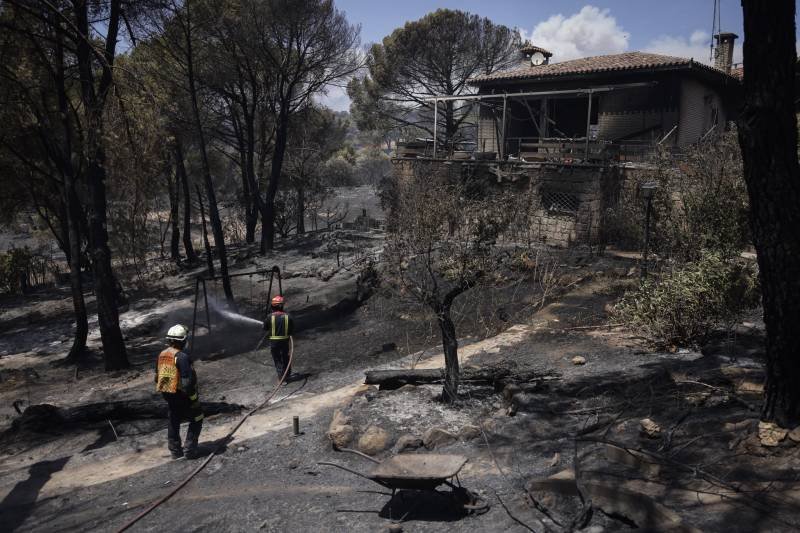
In the Community of Madrid, the fire in the western mountains has been ‘technically stabilized,’ with no flare-ups overnight. The blaze caused devastating damage around the San Juan reservoir, destroying large areas of vegetation, boats, and facilities of the Royal Nautical Club of Madrid. Currently, about 9,500 residents from municipalities like Valdemaqueda and Robledo de Chavela remain evacuated. In response, the President of the Community, Isabel Díaz Ayuso, has announced a €15.2 million aid package with 58 measures to help 17 affected municipalities with post-disaster reconstruction.
In the province of Ávila, the Burgohondo fire, considered the largest in Spain’s history (burning over 50,000 hectares), has also been stabilized. However, securing the area around its 180-kilometer perimeter is expected to take ‘many days.’ High temperatures, low humidity, and south winds gusting up to 30-35 km/h pose a severe challenge to firefighting efforts on Wednesday. Fire departments will focus on monitoring the Mijares and Cebreros areas.
Eastern Region: Old Fires Persist as New Ones Erupt
Meanwhile, the situation in the eastern region remains tense. In the province of Castellón, the Vall d’Uixó fire, which has been burning for five days, is still not under control. It has scorched 9,300 hectares with a perimeter of 81 kilometers. Over 600 firefighters and aerial units are concentrating their efforts in key areas like Alfondeguilla, and about 10,000 residents remain evacuated.
Making matters worse, a new forest fire broke out in the province of Tarragona, in the Catalonia region, around 12:00 PM on Wednesday. The fire spread rapidly, forcing about 600 residents in the municipalities of Masllorenç and Masarbonès to shelter in place and leading to the closure of several roads. The Catalan Civil Protection agency has activated the INFOCAT emergency plan and designated the period from July 29 to August 4 as a high-risk period.
Beyond the Fire Line: Long-Term Economic Impacts Emerge
The frequency and immense destructiveness of these forest fires have drawn high alert from the financial and insurance industries. Regulators, including the European Central Bank and the Bank of Spain, are now incorporating climate risk into their assessment models. This shift suggests that in the future, residents and businesses in high-risk fire zones could face a series of chain economic effects, such as increased insurance premiums, lower property valuations, and tighter credit conditions from banks when issuing mortgages.
