Surge in Sea Arrivals Puts Border Surveillance to the Test
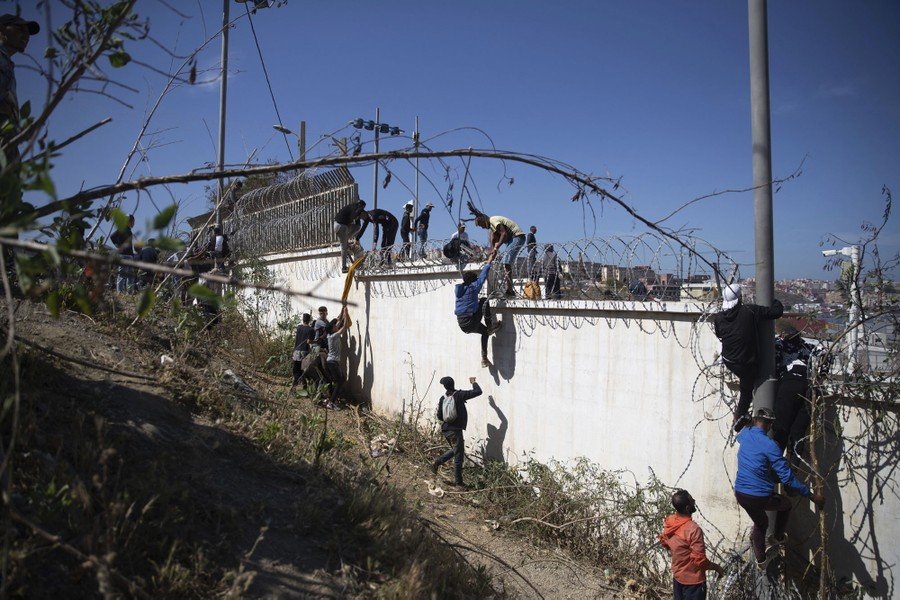
The sea has recently become the primary route for irregular entry into the Spanish enclave of Ceuta. With strict controls at the land border, large numbers of migrants are entering the water at night from the beach in Fnideq, Morocco, swimming around the Tarajal border breakwater to reach Spanish territory. According to reports, in less than two weeks, approximately 2,000 people have arrived in Ceuta this way, including over 500 unaccompanied minors. This wave of migration is considered the most severe since the 2021 Ceuta crisis.
Despite a high-tech surveillance network deployed at the border—including 24-hour drone patrols, laser positioning systems, thermal imaging cameras, and maritime patrols by the Spanish Guardia Civil—authorities have been unable to effectively prevent these large-scale sea crossings.
Overloaded Reception System and Humanitarian Tragedies
The continuous influx of migrants has overwhelmed Ceuta’s social services. The local Temporary Stay Center for Immigrants (CETI), with a capacity for 512 people, is currently housing 727, leaving it severely overloaded. Many who cannot enter the center are forced to live in makeshift shelters on nearby streets, using cardboard and plastic sheets. Additionally, the large number of unaccompanied minors is placing immense pressure on the local child protection system.
At the same time, the perilous crossings are resulting in frequent tragedies. In the past 24 hours, rescue workers have discovered the bodies of four victims on the Ceuta coast. So far in 2026, a total of 31 bodies of migrants who attempted the crossing have been recovered along the coastline, though the actual number of fatalities is likely higher.
New Judicial Ruling Complicates Enforcement
This migrant influx coincides with a major shift in Spain’s border management policy. A recent ruling by Spain’s Supreme Court mandates that authorities can no longer perform ‘hot returns’ (immediate pushbacks) on individuals who enter Ceuta by swimming. Instead, they must initiate a full administrative procedure for every arrival. This means police are now required to identify each person, provide legal aid, and process their applications for international protection individually. This new rule has significantly increased the workload and procedural complexity for law enforcement agencies, prompting several police and Guardia Civil unions to publicly call for more personnel, resources, and clear, unified operational guidelines from the government.
Local Government Requests National Emergency Response
Faced with the escalating situation, the President of the Autonomous City of Ceuta, Juan Vivas, has formally requested that the Spanish central government activate a national emergency response. He has urged the government to take immediate action, including increasing police deployment, expanding reception facilities, establishing a unified command system, and enhancing the capacity for managing unaccompanied minors. Nevertheless, as night falls in Ceuta, the drone and patrol boat surveillance continues, as do the attempts by people to risk the crossing, with the pressure on the border showing no sign of abating.
