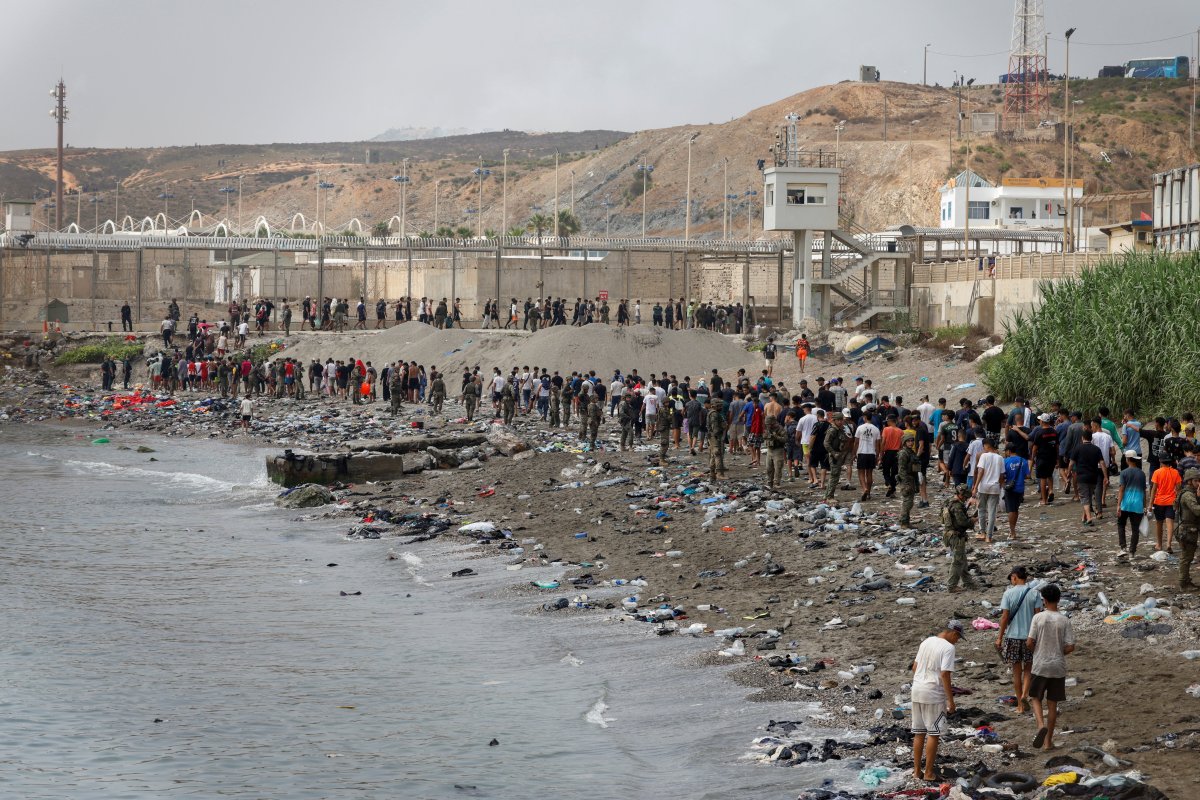
The border of Spain’s North African enclave, Ceuta, is facing its most severe migration challenge of the 21st century. In just 24 hours, nearly 49,000 people entered Ceuta from Morocco by land or by swimming, triggering a full-blown crisis.
# Record Migrant Influx and Overwhelmed Borders
According to data from the Spanish Ministry of the Interior, the scale of this influx into Ceuta is unprecedented, approximately four times larger than the major migrant crisis of 2021. A massive number of migrants converged on the border, overwhelming local border guards. Tragedy followed, with at least 19 fatalities reported to date. Concurrently, Spain’s other North African enclave, Melilla, also reported smaller-scale illegal entries, indicating a surge in pressure along the entire border.
# Government’s Emergency Response and Repatriation Agreement
Facing the rapidly deteriorating situation, the Spanish government has acted swiftly. The army has been urgently deployed to Ceuta to reinforce border control and assist local authorities. Spanish Prime Minister Pedro Sánchez and the Minister of the Interior are scheduled to visit Ceuta to assess the situation firsthand, highlighting the gravity of the matter. In response to the crisis, the city of Ceuta has canceled its annual festivities. Although Spain has reached an agreement with Morocco to repatriate all illegal entrants, and hundreds of migrants have already returned voluntarily, tensions at the border have not fully subsided.
# Rumors as a Catalyst and the Humanitarian Dilemma
The Spanish government has indicated that false information widely spread on social media, suggesting that ‘the border would be opened to migrants,’ was a significant catalyst for this mass crossing event. Beyond the challenge of border control, immense humanitarian pressure has followed. The international organization Save the Children estimates that among the arrivals are approximately 7,000 unaccompanied minors. The organization has urgently called on the Spanish government to provide safe shelter, medical care, and psychological support for these children and adolescents. It also recommends transferring some individuals to other autonomous communities on the Spanish mainland to alleviate the immense strain on Ceuta’s social welfare system.
# International Attention and EU Border Security
The Ceuta crisis has drawn widespread international attention. The Dutch government has publicly called on Spain to take all necessary measures to secure the EU’s external borders, stating that the European Commission is prepared to offer support. This incident has once again brought the EU’s migration policies and external border management to the forefront, testing the coordination and cooperation capabilities among member states and between the EU and its neighboring countries.
