July Inflation Data Overview
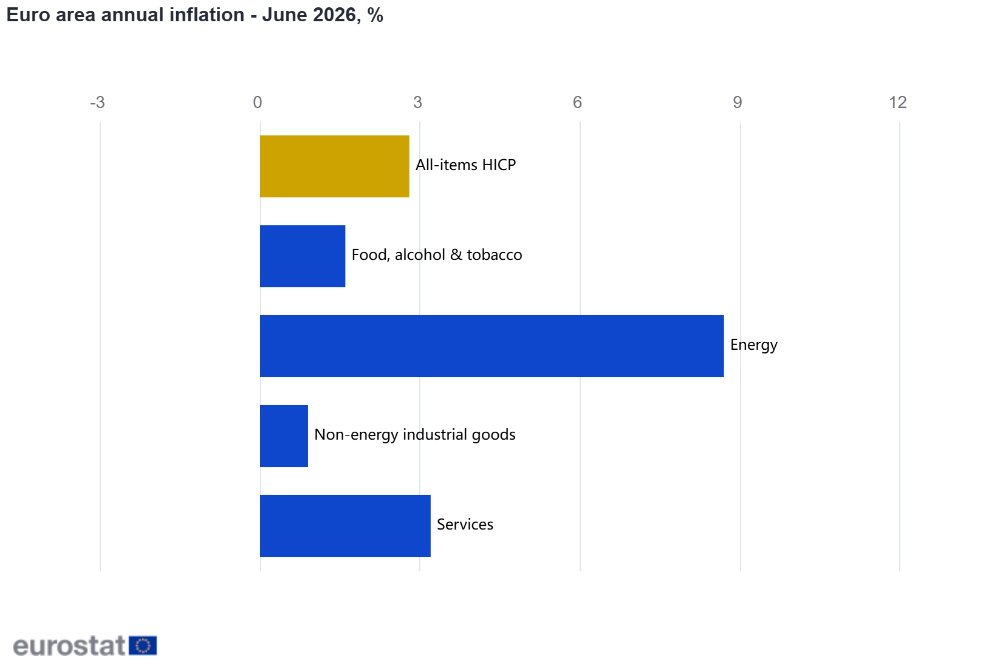
According to data released by Spain’s National Statistics Institute (Instituto Nacional de Estadística, INE) on July 30, 2026, the country’s annual Consumer Price Index (CPI) rose by 3.5% in July. This figure represents a 0.3 percentage point increase from June’s level and marks the sixth consecutive month of growth since the beginning of the year. On a monthly basis, the CPI increased by 0.2% in July.
Meanwhile, the Harmonised Index of Consumer Prices (HICP), used for comparison with other EU member states, rose to 3.8% year-on-year. This widens the gap with the European Central Bank’s (ECB) 2% inflation target, signaling significant challenges for price control in the short term.
Core Inflation Also on the Rise
More notably, core inflation, which excludes volatile energy and unprocessed food prices, also rose to 3.0% in July, a slight increase of 0.1 percentage points from the previous month. The persistent rise in core inflation indicates that price pressures are not confined to the energy sector but are spreading to a broader range of goods and services, a trend often seen as a sign of sustained inflationary pressure.
Energy Prices: The Main Driver
Analysis indicates that the key driver of this recent inflationary surge is the energy sector, particularly the significant increase in fuel and electricity costs. The expiration of some tax cuts and subsidies previously implemented by the Spanish government to tackle the energy crisis has led to a rebound in electricity prices. Concurrently, international geopolitical factors, such as the situation in Iran, have contributed to ongoing volatility in global energy markets, further driving up domestic fuel costs. Although Spain’s Ministry of Economy has stated that measures are in place to cushion external shocks, the complex international environment continues to exert pressure on energy prices.
Reactions and Outlook
In response to the persistent inflationary pressure, Spain’s main opposition party, the People’s Party (Partido Popular, PP), has criticized the current government’s economic policies. The party argues that the government has failed to effectively curb price increases and has instead exacerbated inflation by raising energy taxes, leading to an erosion of household purchasing power and widening the inflation gap between Spain and other Eurozone countries.
Overall, with energy costs unlikely to fall in the short term, Spanish residents are expected to continue facing significant cost of living pressures in the coming months. Sustained inflation not only affects daily life but also presents greater challenges for the government’s macroeconomic management.
