Ceuta Overwhelmed by Migrant Influx, Deepening Humanitarian Crisis
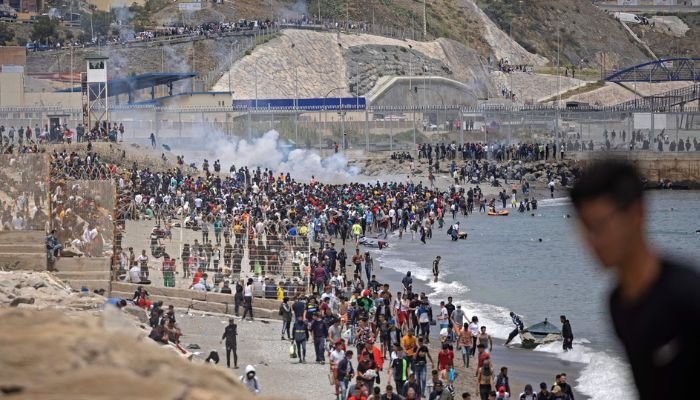
Ceuta, Spain’s autonomous city in North Africa, is experiencing an unprecedented migration crisis. As of July 31, the President of the Autonomous City of Ceuta, Juan Jesús Vivas, confirmed that the number of migrants entering from neighboring Morocco has surged to approximately 60,000. This figure represents over 70% of Ceuta’s total population (around 83,600). President Vivas stated bluntly that the current situation is beyond the city’s capacity. Figures previously released by Spain’s Ministry of the Interior, which estimated around 49,000 arrivals, were significantly lower than the actual influx.
The crisis has also been marked by a severe humanitarian tragedy. Reports indicate that 34 people have died while attempting to reach Ceuta by sea. The vast majority of the deceased drowned while trying to swim around the Tarajal border breakwater. Search and rescue operations are still underway, and the bodies of the victims have been sent to forensic services for identification.
Court Ruling Sparks the Influx
The immediate trigger for this migrant wave was a key ruling by Spain’s Supreme Court in July. The ruling prohibited “hot returns” (immediate pushbacks) for migrants arriving by sea in the enclaves of Ceuta and Melilla. However, immediate deportations remain permissible for those who cross by land, such as by climbing the border fences. A spokesperson for the Guardia Civil (Spanish Civil Guard) stated that since the ruling, the flow of irregular migrants into Ceuta has transformed from a “slow trickle” into an “instantaneous surge.” The Spanish government contends that “mafias and criminal organizations” exploited the ruling to orchestrate the large-scale smuggling wave.
Spanish Government’s Emergency Response
To address the crisis, Prime Minister Pedro Sánchez traveled to Ceuta on July 31 to coordinate the response. Upon arrival, he faced protests from some local residents who accused his government of failing to secure the border. Nevertheless, the Sánchez administration swiftly announced a series of measures. These include: installing a floating barrier system near the Tarajal breakwater to deter sea crossings; reinforcing security with additional police, Guardia Civil, and military personnel; expediting the identification and deportation processes for arrivals; and intensifying efforts to dismantle human trafficking networks. At the same time, Sánchez expressed gratitude for Morocco’s cooperation on border control and repatriations. Melilla, Spain’s other North African enclave, has also closed its land border, with reports of approximately 300 migrants having already entered the city.
Diplomatic Turmoil Within the EU
The Ceuta crisis has rapidly triggered a chain reaction within the EU. Italian Prime Minister Giorgia Meloni attributed the crisis to changes in Spain’s migration policy, claiming it “encouraged human trafficking.” She warned that her government is considering “special measures,” which could include suspending the Schengen free-movement mechanism with Spain. In response, Spanish Foreign Minister José Manuel Albares summoned the Italian ambassador to Spain to formally protest these comments. European Commission President Ursula von der Leyen described the mass border crossing as “unacceptable” and promised additional EU operational support for Spain, along with strengthened coordination with Morocco. The EU Commissioner for Home Affairs also expressed readiness to increase support for Spain. This crisis is being viewed as the first significant test of the EU’s new Pact on Migration and Asylum.
