Nearly 50,000 Migrants in a Single Day Plunge Ceuta into Chaos
On the afternoon of July 30, 2026, local time, the Spanish autonomous city of Ceuta, located in North Africa, faced an unprecedented migrant wave. In just one day, approximately 49,000 undocumented migrants, primarily from Morocco and sub-Saharan African countries, crossed the border en masse by swimming and climbing over breakwaters, flooding the city of just over 80,000 inhabitants. Aerial footage showed the sea dotted with people, depicting a scene of chaos.
As a large number of migrants entered the urban area, Ceuta’s public order faced severe challenges. Shops closed early, residents formed their own patrols, and the entire city was on high alert. As of the 30th, the incident had resulted in at least 18 deaths, mostly from drowning or stampedes while climbing over obstacles. Local officials stated that the actual number of casualties could be higher due to difficulties in counting. A large number of migrants, including many unaccompanied minors, were left homeless on the streets, worsening the humanitarian situation.
Judicial Ruling Loophole Blamed as Trigger for the Crisis
The sudden outbreak of this crisis is widely believed to be a direct consequence of a ruling made by the Spanish Supreme Court in early July of the same year. According to special border regulations long-standing in Ceuta and Melilla, undocumented migrants who entered by climbing fences at the land border could be swiftly returned to Morocco by Spanish law enforcement. However, the new Supreme Court ruling stipulated that migrants entering the two enclaves by sea could not be immediately repatriated and must undergo the full immigration review process.
Spain’s Ministry of the Interior pointed out that organized transnational people-smuggling networks quickly exploited this legal change, widely promoting the message that ‘entry by sea will not result in immediate repatriation.’ This incited a large number of migrants to abandon traditional land routes and instead attempt to enter Ceuta from the sea in a concentrated effort. The exploitation of this information gap ultimately led to the massive and concentrated sea crossing event on July 30.
Spain’s Emergency Response and a Chain Reaction from European Neighbors
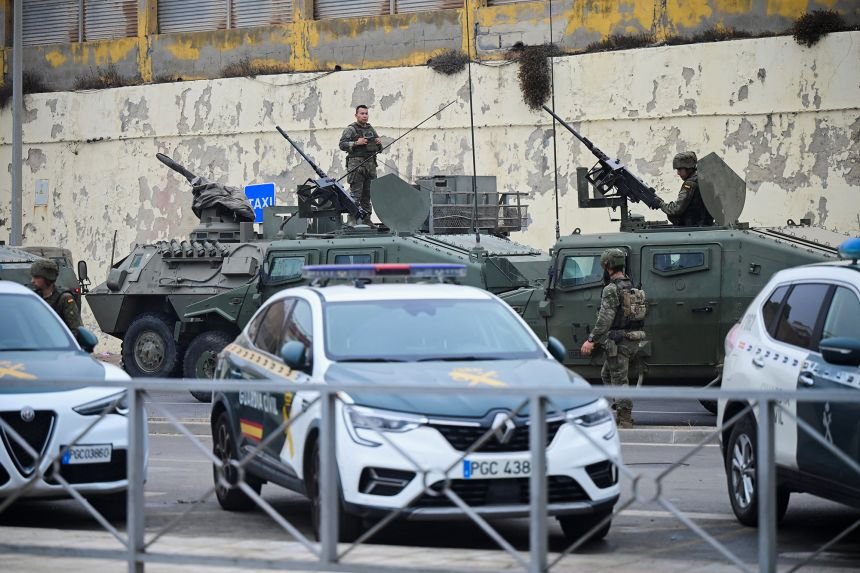
Faced with the sudden crisis, the President of the Autonomous City of Ceuta, Juan Jesús Vivas, declared a ‘full-scale humanitarian and social emergency’ and requested assistance from the central government. Spanish Prime Minister Pedro Sánchez promised to use all necessary resources to restore order. Although Madrid did not activate a state of national emergency, the Ministry of the Interior announced on the evening of the 30th that it would immediately dispatch an additional 60 soldiers and 30 Guardia Civil officers to Ceuta to assist with border security and maintaining public order.
The situation in Ceuta quickly raised alarm across several European countries. Italian Prime Minister Meloni stated that measures, including the potential suspension of the Schengen Agreement, were being considered to secure her country’s borders. Meanwhile, the French Ministry of the Interior has ordered an immediate tightening of controls at the Franco-Spanish border. Concurrently, Spain’s other enclave, Melilla, also experienced smaller-scale border-rushing incidents, with about three to four hundred people attempting to break through, but the situation there remains under control for now.
Legacy Issues and Continuous Migration Pressure
As Europe’s land outpost on the African continent, Ceuta has long been a focal point for migration. Even before this crisis, the local capacity for receiving migrants was already stretched to its limit. Official data showed that as of July 15, all reception centers in Ceuta were full, with facilities for unaccompanied minors operating at 2400% of their designed capacity.
The scale of nearly 50,000 arrivals in a single day far surpasses the 2021 crisis, which saw 8,000 migrants enter over two days. It not only exposes the vulnerabilities in the immigration management and border control systems of Spain and the EU but also thrusts Ceuta’s unique geographical and historical issues back into the spotlight. Currently, the Spanish military and police remain on high alert at the border, and the future development of this crisis and its impact on European migration policy remain highly uncertain.
